Direct answer
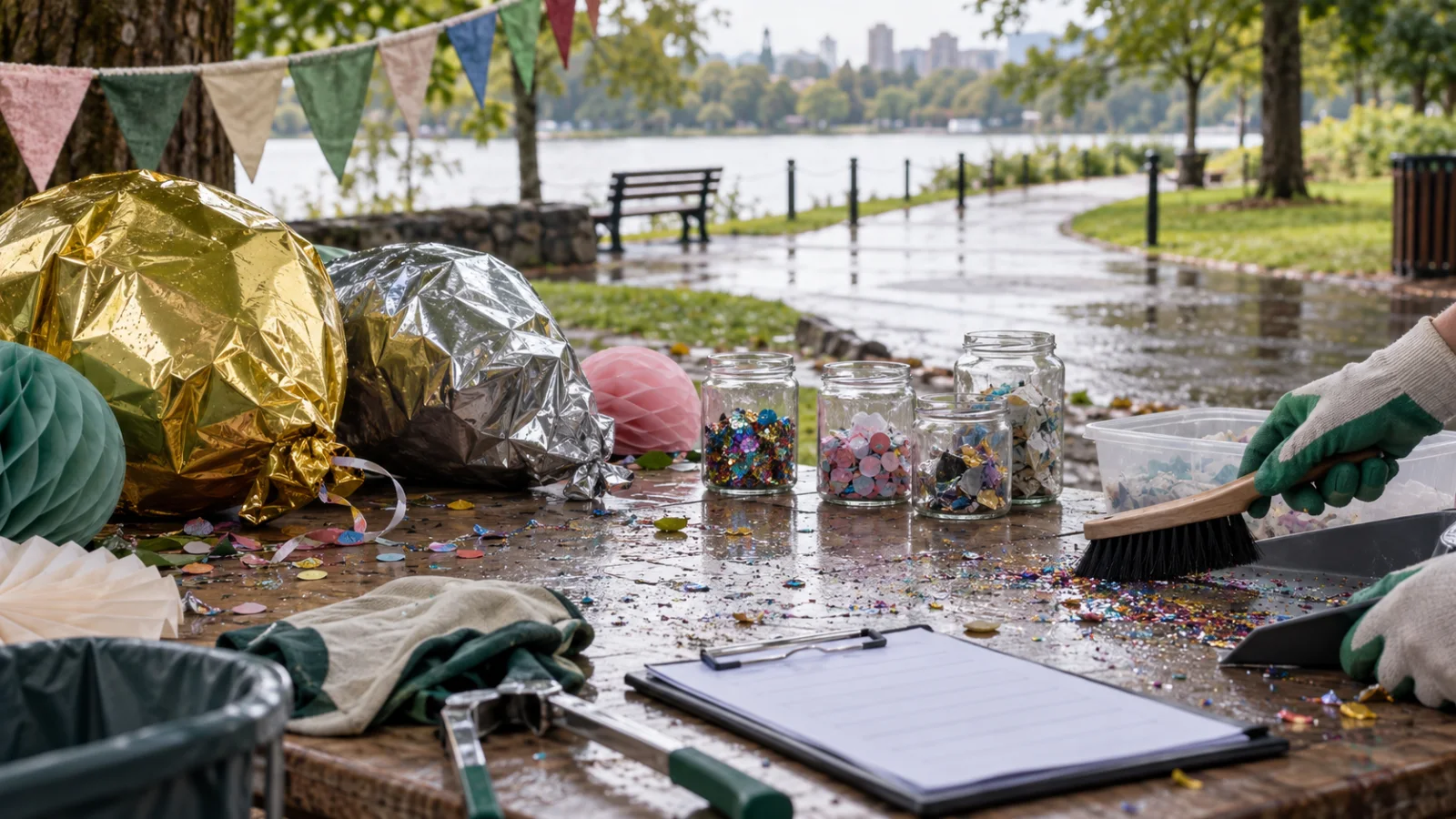
Glitter, plastic confetti and released balloons are small celebration items that can become plastic pollution quickly because they are designed to scatter, shine, float or be thrown. The best answer is prevention: avoid loose plastic glitter, avoid balloon releases, choose reusable decorations, keep confetti indoors or contained if it is used at all, and write cleanup rules before an event starts. Treat biodegradable, compostable and plastic-free claims carefully because the real question is where the material goes after the celebration.
Key points
- Loose plastic glitter is an intentionally added microplastic concern, and the EU restricts some uses of non-biodegradable, insoluble plastic glitter.
- Balloons eventually return to land or water, where NOAA describes them as marine debris that can fragment and harm wildlife.
- Confetti is risky when it is released outdoors because small pieces are hard to recover before wind, rain and drains move them.
- Reusable fabric decor, rented props, plants, lighting and contained paper decorations usually beat disposable sparkle.
- Event planners should write a decoration inventory, cleanup route and rain plan before approving any scatter item.
Related Plastika Problema reading
- Event plastic waste reduction checklist - a broader planning companion for venues, festivals and community events
- Microplastics in cosmetics and microbeads - context for intentionally added microplastics and sparkle claims
- How plastic reaches the ocean from city streets - why wind, rain and storm drains matter for small event debris
- Biodegradable vs compostable vs recycled plastic - a green-claims guide for checking alternative materials
- Plastic reduction actions - site-wide habits for stopping leakage before cleanup is needed
Why celebration plastics deserve their own article
Celebration waste is easy to dismiss because it feels joyful, temporary and small. A few handfuls of glitter, a confetti burst, a balloon arch or a bag of plastic table scatter can seem less important than bottles, bags or takeaway containers. The environmental problem is that many celebration items are designed to do exactly what pollution prevention tries to avoid. They scatter into tiny pieces, float away, catch the wind, stick to soil, wash across pavement and become difficult to collect after a few minutes of use.
This makes the category a useful lesson in source reduction. Cleanup is much harder when the product was designed to disperse. A cup can be picked up. A ribbon can be retrieved. A thousand reflective flakes across wet grass are a different problem. A balloon released for a photo may travel far beyond the person who released it. A public-information site should therefore treat party plastics as a design and planning issue, not as a scolding note after the event is over.
Direct answer: what should planners do?
The direct answer is to ban outdoor release and scatter items by default. Do not release balloons. Do not throw plastic confetti outdoors. Do not use loose plastic glitter on tables, paths, beaches, boats, gardens or open-air venues. If sparkle is essential for an indoor craft or performance, keep it contained, collect it with dry methods and keep it away from sinks, drains and outdoor exits. For most events, reusable fabric bunting, rented backdrops, paper lanterns kept under cover, flowers, plants, projection, lighting and durable props give the same festive signal with less leakage risk.
A practical event policy can be short. Decorations must be reusable, rented, returned, composted through a verified route, or collected as solid waste before the site reopens. Nothing may be intentionally released into air or water. Anything smaller than a coin needs approval and a cleanup method. The policy should be written into supplier briefs, venue rules and staff checklists before the decoration order is placed. Once the glitter is on the ground, the event has already lost control.
Glitter is not only decoration; it can be microplastic
Traditional glitter is often made from tiny plastic film pieces, sometimes coated to reflect light. That size and design place it directly in the microplastics conversation when the material is non-biodegradable and insoluble. The European Commission's page on Regulation (EU) 2023/2055 explains that the REACH restriction covers synthetic polymer microparticles, including certain plastic glitter placed on the market on its own or intentionally added to products. It also explains important limits: natural, inorganic, biodegradable or water-soluble glitter is outside that microplastic scope, and some uses have transitional periods or exemptions.
For readers outside Europe, the policy still teaches a useful distinction. Loose plastic glitter is not the same as a durable decoration sewn onto fabric, trapped in glue, permanently incorporated in a solid object or made from a non-plastic material. The practical risk is highest when tiny loose particles are intentionally spread where they can escape. That is why the best household and event rule is simple: avoid loose plastic glitter when there is any route to drains, soil, sweeping water, wastewater or outdoor air.
Confetti has the same scatter problem
Confetti is made for dispersal. That is the appeal and the problem. Plastic confetti, metallic-looking film confetti and laminated pieces can be light enough to travel, small enough to miss during cleanup and shiny enough to be confused with leaves, shells or food fragments by animals. Even paper confetti can create litter or drain problems if it is used outdoors in heavy quantities, printed with coatings, mixed with foil or released before rain. The environmental question is not only what the material is. It is whether the pieces will be recovered quickly.
If confetti is allowed, keep it contained and site-specific. Use it indoors on hard floors where sweeping is possible. Avoid waterways, balconies, beaches, parks, street drains, open fields and windy rooftops. Choose plain, uncoated material only when the venue has a real cleanup route, and do not rely on the word biodegradable as permission to leave it behind. A biodegradable material still needs conditions, time and a place where breakdown is acceptable. A public park is not a composting system.
Balloons become debris when they escape
NOAA defines marine debris as persistent manufactured or processed solid material that is disposed of or abandoned into the marine environment or Great Lakes, whether directly or indirectly and intentionally or unintentionally. Balloons fit the lesson because they can become debris without anyone seeing the landing point. A balloon release may look clean at the event site because the waste leaves the frame. That does not mean the waste disappears.
NOAA Fisheries has described balloons as a pervasive form of marine debris and notes that balloons eventually return to Earth and can wash into oceans, Great Lakes and waterways. Its 2024 feature also explains that Mylar, or foil, balloons are made from plastic nylon sheets with a metal coating, that they can create land and power-line problems, and that exposure to wind, waves and sun can break them into smaller pieces. The practical conclusion is clear enough for any venue rule: celebrate with decorations that stay attached, not objects designed to leave the site.
How wind, rain and drains change the risk
Small event debris is strongly affected by weather. Dry confetti can sit near a stage until a gust moves it across a road. Glitter can stick to shoes and leave the site. Balloon ribbons can snag in trees or fences, then break loose later. Rain turns a messy surface into a transport route. EPA's Trash Free Waters guidance explains that poorly managed trash on land can be carried by wind or rain into nearby waterways, travel downstream and ultimately reach the ocean. That pathway is exactly why small celebration materials should be controlled before the first weather change.
The rain plan should be written before the event. Which drains are near the venue? Which decorations could move? Are bins covered? Who checks the site after teardown? Are table decorations weighted or loose? Will staff sweep dry material before hosing or mopping? A common mistake is to clean a paved area by washing particles toward the gutter. For glitter, confetti and balloon fragments, dry capture is usually safer than turning cleanup into runoff.
A better decoration hierarchy
Use a simple hierarchy. First, choose atmosphere without loose material: lighting, music, layout, projection, flowers, plants, reusable signage, rented props and fabric color. Second, choose durable decorations that can be stored and used again: bunting, banners, stage pieces, table numbers, washable cloth, refillable centerpiece jars and reusable photo walls. Third, if a disposable decoration is needed, choose one large enough to collect, unlaminated where possible and matched to a verified disposal or composting route. Last, reject items designed to scatter outdoors or float away.
This hierarchy avoids the false choice between a joyless event and a wasteful one. A well-designed event can feel more intentional when the decor is durable. Fabric flags photograph well. Plants can be reused or donated. Lighting changes mood without creating litter. Rented props reduce storage and waste. A paper sign that is collected and recycled correctly is easier to manage than hundreds of plastic stars spread across a lawn. The best decoration is the one that still exists as a known object at the end of the night.
Checklist for event teams and venues
Create a decoration inventory before purchasing. List each item, material, supplier, quantity, where it will be used, how it is attached, how it will be collected and where it goes after the event. Mark high-risk items: loose particles, foam, film, ribbon, small plastic pieces, disposable table scatter, glitter cosmetics, balloon arches, promotional giveaways and laminated signs. If an item cannot be collected confidently, remove it from the plan or redesign it.
Assign cleanup owners. One person should inspect drains and site edges before the event. One person should check bins during the event. One person should inspect the site after teardown, including grass edges, planters, stair corners, loading zones and nearby gutters. Outdoor events should have a weather trigger: if wind or rain rises, loose decorations are removed or secured. The point is not to create a heavy report. It is to make sure the material has an owner from purchase to disposal.
Schools, weddings and community events
Schools often use glitter and confetti for crafts because the materials are cheap and visually rewarding. A better classroom policy is to replace loose glitter with reusable collage materials, colored paper shapes kept indoors, washable paint, fabric scraps, stamps, projection, or large decorations that students can take home and reuse. If glitter is used for an accessibility, art or curriculum reason, it should be contained on trays and cleaned dry. It should not be rinsed into sinks or sent outside on display boards where flakes fall off.
Weddings and community celebrations can set expectations early. Put decoration rules in the venue agreement and supplier brief. Tell photographers and planners that balloon releases, outdoor confetti cannons and glitter exits are not part of the event. Offer attractive alternatives: fabric streamers, flower petals collected from a controlled aisle when locally appropriate, bells, flags, bubbles used away from drains if the liquid and packaging are managed, lighting cues, music cues, reusable signs or a group toast. People accept limits more easily when the replacement still feels celebratory.
Greenwashing cautions for sparkle claims
Sparkle products often use comforting words: eco glitter, biodegradable confetti, compostable balloons, ocean safe, plant based, natural, recyclable or non-toxic. Some products may be genuine improvements. The caution is that the claim rarely answers the whole event question. What material is it? Does it contain plastic film, coating, adhesive, ink or metallic layers? What conditions are needed for breakdown? Is it accepted by a real composting route? What happens if it lands in a drain, lake, beach, street or garden bed?
The strongest claim is practical and narrow. Say the event used reusable fabric bunting and no balloon release. Say paper decorations were collected indoors and recycled where accepted. Say no loose plastic glitter was purchased. Avoid saying the event was zero waste because a product label sounded green. For public education, the best message is not that every alternative is perfect. It is that intentional release and scatter are bad design when recovery is unlikely.
What households can do after a celebration
After a party, clean from the edges inward. Pick up large items first, then sweep small pieces before mopping. Check patios, door mats, garden beds, street edges and drains. Do not use a leaf blower to move confetti or glitter out of sight. Do not hose glitter or balloon fragments into the street. Save reusable decorations in a labeled box so the next event begins with what you already own. If you find old glitter or plastic confetti in a drawer, use it only in a contained indoor craft or dispose of it as waste rather than spreading it outdoors.
Household habits also shape demand. Avoid buying party packs that include mixed plastic trinkets, table scatter and single-use decor you did not actually want. Borrow from friends, rent from local suppliers, keep a small reusable celebration kit and choose one strong visual element instead of many tiny disposable ones. The goal is not to remove delight. It is to stop delight from being designed as leakage.
Bottom line
Glitter, confetti and balloons are a plastic pollution lesson in miniature. They show why source reduction matters more than heroic cleanup. When a product is designed to scatter, float or fragment, the responsible decision happens before purchase. Choose reusable, attached and recoverable decorations. Avoid releases. Keep sparkle contained. Verify green claims against real disposal routes. Plan cleanup before the event begins.
For event planners, the next action is a decoration inventory with owners and cleanup routes. For households, the next action is a reusable party box and a no-release rule. For schools, the next action is replacing loose glitter with contained art materials. For venues, the next action is a simple decoration policy. Small celebration plastics are small only before they escape. After that, they become everyone else's cleanup problem.
Detailed infographic
Celebration plastic prevention map
A practical event-planning flow for keeping glitter, confetti, balloons and tiny decorations out of drains, soil and waterways.
- Inventory List decorations by material, quantity, location, attachment and cleanup route.
- Reject Remove outdoor glitter, plastic confetti, balloon releases and tiny table scatter.
- Replace Use fabric, rented props, lighting, plants and large recoverable decorations.
- Contain If small pieces are used indoors, keep them on hard surfaces and capture them dry.
- Inspect Check drains, edges, planters and gutters before rain or site handover.
Action checklist
- Write a no-release rule for balloons and floating decorations.
- Do not rinse glitter, confetti or party fragments into sinks or storm drains.
- Ask suppliers what material the decoration uses and where it goes after use.
- Choose decor that can be packed, rented, reused, donated or collected.
- Assign one person to inspect the site after teardown.
Frequently asked questions
Is glitter a microplastic?
Traditional loose glitter can be made from tiny non-biodegradable plastic particles, so it can fall within the intentionally added microplastics conversation. Material and use matter, so check whether it is plastic, soluble, biodegradable, inorganic or permanently trapped in another material.
Are biodegradable balloons safe to release?
No. A biodegradable claim is not permission to release balloons. Balloons can travel, entangle wildlife, be mistaken for food and become litter before any breakdown conditions are met.
Is paper confetti always safe outdoors?
Not automatically. Paper confetti can still become litter, clog drains or contain coatings and inks. Use it only where it can be collected, and avoid windy, wet or water-adjacent sites.
What is the best replacement for balloon releases?
Use attached decorations, flags, fabric streamers, lighting, bells, music, group photos, planted trees, reusable signs or donation rituals. The replacement should create a moment without sending material away.
How should a venue write a decoration rule?
A simple rule is: no intentional release, no loose outdoor micro-pieces, no glitter near drains or sinks, and every decoration must have a named cleanup route before approval.
Sources and further reading
- European Commission Regulation (EU) 2023/2055 on intentionally added microplastics
- European Commission microplastics and plastic pellets regulation overview
- NOAA Fisheries on balloons as marine debris
- NOAA Ocean Service definition of marine debris
- EPA actions to reduce trash pollution
- EPA Learn About Aquatic Trash
- UNEP Single-use plastics: A roadmap for sustainability