Direct answer
Plastic recycling symbols identify resin families, not a promise that the item will be recycled. PET and HDPE are often accepted, PP is increasingly collected in some places, while PVC, polystyrene, films, mixed layers and OTHER plastics are often harder. The right question is not only what number is on the package, but whether your local system accepts that exact item when it is clean and dry.
Key points
- The triangle number is a material code, not a guarantee of local acceptance.
- Shape, color, cleanliness and size can matter as much as the resin code.
- PET and HDPE are usually easier; PVC, PS and mixed materials are usually harder.
- Recycling works best after reduction, reuse and smarter packaging design.
Why the symbol causes confusion
Many people see the chasing arrows triangle and assume the item will be recycled. That is the central misunderstanding. The number mostly tells a sorter what resin family the object belongs to. It does not tell you whether the object is valuable in your region, whether it can pass through equipment, whether it is too dirty, whether it is too small, or whether a nearby buyer exists for that material.
This difference matters because readers often want simple answers such as 'is number 5 plastic recyclable' or 'what does PET mean'. A good answer should be direct and local at the same time. Yes, the code gives a clue. No, it is not the final answer. Your city, collector or drop-off point has the final operational rule.
The seven common plastic codes
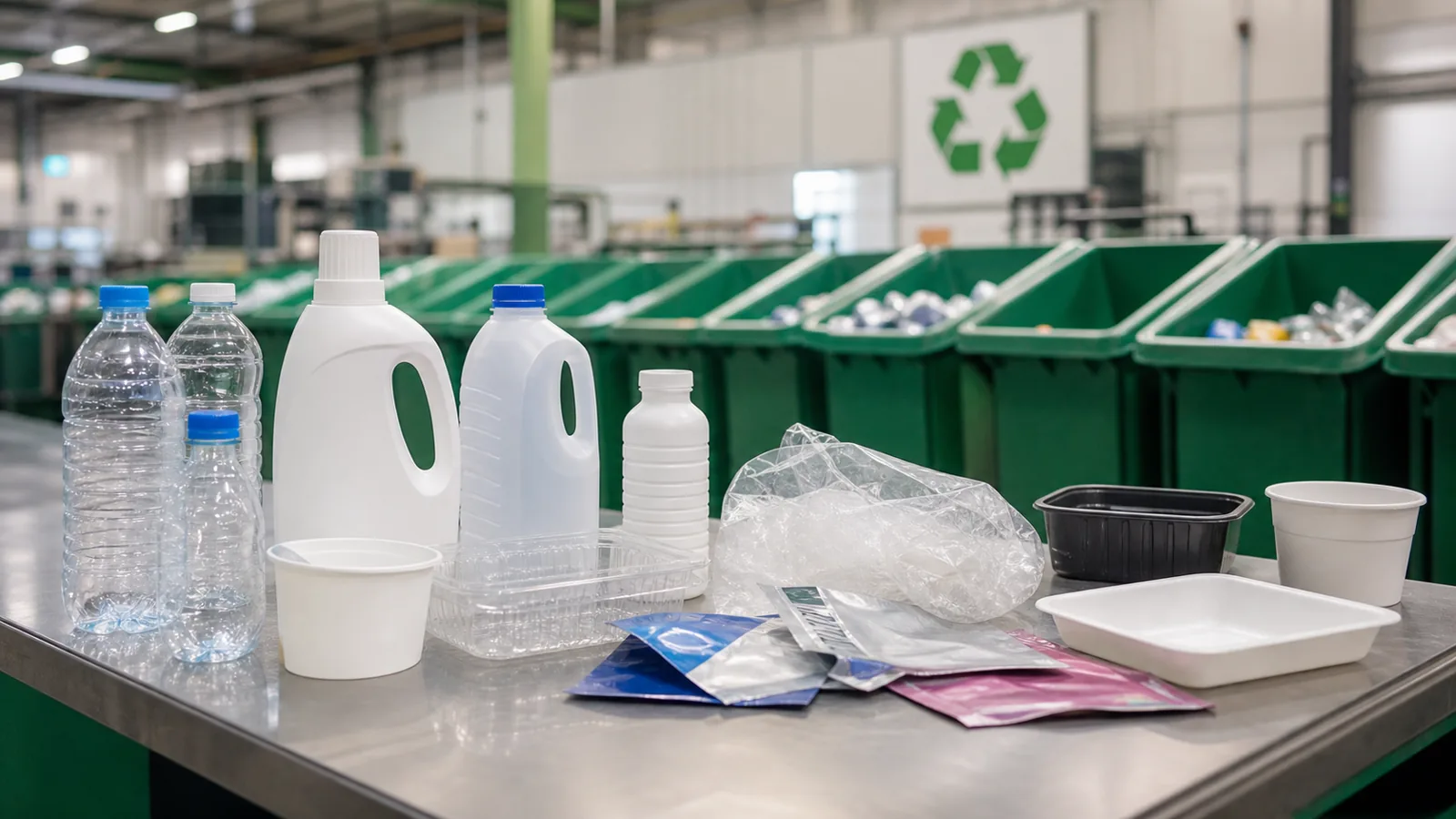
PET or PETE, number 1, is common in drink bottles and some food packaging. It is one of the most recognized plastics in recycling systems, especially when bottles are empty and clean. HDPE, number 2, is used for milk jugs, detergent bottles and sturdy containers. It is also widely recycled in many systems because it is durable and has established end markets.
PVC, number 3, appears in pipes, frames, some films and specialist uses. It can contain additives and is usually not a preferred household recycling material. LDPE, number 4, includes many flexible bags and films. Some stores or special systems collect it, but curbside programs often reject loose film because it tangles equipment. PP, number 5, is used in tubs, caps and food containers. It is collected in some places, but rules vary. PS, number 6, includes rigid polystyrene and foam; it is often difficult to recycle economically. OTHER, number 7, is a mixed category for multilayer or less common plastics, so it requires case-by-case checking.
Why local rules beat generic advice
Two items with the same code can behave differently in a facility. A clear PET bottle is not the same operational problem as a black PET tray. A large HDPE bottle is not the same as a small cap that may fall through screens. A greasy takeaway container can contaminate a stream even when the clean version would be accepted. Labels, metal springs, pumps and mixed paper-plastic layers create more complications.
This is why the best habit is to learn the local accepted list, not memorize a universal internet table. A universal guide is useful for first understanding. The local rule decides what you should put in the bin today. When in doubt, the conservative choice is to keep contaminants out of recycling and look for a dedicated collection route.
How to sort better without overthinking
Start with four questions. Is the item empty? Is it reasonably clean and dry? Is it on the accepted local list? Is it big enough and shaped correctly for the collection system? If the answer is no, recycling may not be the right route. This prevents wishcycling, which is the habit of putting an item in the bin because we hope someone else can handle it.
Better sorting is not about guilt. It is about making the recovery system less noisy. A clean bottle in the right stream is valuable. A bag full of random mixed plastics can slow the line, contaminate paper, or send more material to disposal. Good recycling begins before the bin, at the moment of purchase, when you can choose simpler packaging or avoid it entirely.
What brands should learn from the codes
A brand that prints a recycling symbol but uses dark colors, mixed layers, tiny components or unnecessary coatings is shifting complexity downstream. Better packaging is simple, reusable where possible, clearly labeled and aligned with real infrastructure. A package should be designed for the system that will actually receive it, not for a marketing claim.
For readers, the practical rule is simple: use the code as a clue, then verify locally. For producers, the standard should be higher: design packaging that does not require a detective story. The more obvious the material, the more useful the recovery route becomes.
Common mistakes with recycling numbers
The biggest mistake is wishcycling: putting an item in the recycling bin because the symbol feels reassuring. Wishcycling can contaminate cleaner material and make sorting more expensive. Another mistake is treating all items with the same number as equal. A bottle, tray, film, cap and black container may share resin chemistry but behave differently in sorting equipment.
A third mistake is forgetting the local market. Recycling is not only a chemistry question; it is a logistics and economics question. If a city cannot collect, sort, bale and sell a material, the symbol on the package does not create a market by itself. That is why good recycling advice always ends with local verification.
A better sorting routine for busy households
Create a small sorting station with labels that match your city rules, not generic internet categories. Keep one place for accepted rigid plastic, one place for paper or cardboard, and a separate spot for special drop-off items such as film if your area supports it. Put the rejected list nearby because people often remember what is allowed but forget what causes trouble.
The routine should reduce decisions. Empty the item, check whether the local list accepts that shape, keep it dry and place it in the right stream. If a household has to debate every package, the system will fail. The best sorting station makes the common correct action obvious and the common wrong action harder.
What better packaging design would look like
Better packaging would use fewer mixed materials, clearer components and formats that existing systems can actually handle. A bottle with a removable sleeve, a compatible cap and clear resin is easier than a multi-layer pouch with metalized film. A refill system is better than a package that depends on perfect sorting after one short use.
Consumers can reward clear design, but producers control many of the technical choices. The triangle code should not be a decoration used to imply responsibility. It should be part of a chain that includes design, collection, sorting and genuine end markets. Until that chain exists, reduction and reuse remain stronger than recycling alone.
How this guide should answer reader questions
People who search for recycling symbols usually want a yes-or-no answer. The responsible answer is slightly longer: the number tells you the resin family, while the local program tells you whether that exact item is accepted. A search result that says 'number 5 is recyclable' without mentioning local rules is incomplete. A search result that says 'nothing is recyclable' is also unhelpful.
The best answer gives a hierarchy. First identify the code. Then identify the format: bottle, tub, tray, film, foam or cap. Then check cleanliness and local acceptance. Finally, avoid wishcycling. This structure is short enough for a featured answer and detailed enough for a reader who wants to act correctly.
How to use recycling data at home or work
A household can review the rejected items that keep appearing beside the bin. A workplace can run a one-day waste sort to see whether people are confused by cups, films, food residue or mixed packaging. A school can place accepted examples above bins instead of relying on abstract labels. The point is to make the right action visible at the moment of disposal.
For businesses, the same data can influence purchasing. If a cafeteria buys packaging that the local system rejects, the recycling message is already broken before customers arrive. Better procurement asks whether the product fits the local route, not only whether a supplier calls it recyclable.
Bottom line
Plastic recycling symbols are useful when they are treated as the first clue, not the final instruction. The number tells you what the material broadly is. Your local system tells you whether that exact item can be collected and processed. The cleaner habit is to reduce unnecessary packaging, reuse what is durable, sort accepted materials well and stop sending confusing items into the wrong stream. Good recycling is specific, local and honest about limits.
Detailed infographic
Plastic code decision tree
A detailed sorting logic that turns the seven symbols into practical action.
- Read code Identify the resin family from the number when available.
- Check format Bottle, tub, tray, film, foam and cap may follow different rules.
- Clean item Empty, rinse when needed and keep dry.
- Verify locally Use city or collector instructions before binning.
- Avoid wishcycling If rejected locally, find reuse, drop-off or disposal route.
Action checklist
- Separate flexible film from rigid packaging.
- Do not assume the arrows mean accepted.
- Keep food residue out of dry recycling.
- Prefer simpler packaging before recycling is needed.
Frequently asked questions
Does the recycling symbol mean recyclable?
No. It usually identifies plastic resin type. Local acceptance depends on collection rules, equipment, contamination and markets.
Which plastic numbers are easiest to recycle?
PET number 1 and HDPE number 2 are often the easiest in many systems, but local rules still decide.
Why are black plastic trays often rejected?
Some sorting systems struggle to detect black plastic, and tray formats may have lower value or different additives than bottles.