Direct answer
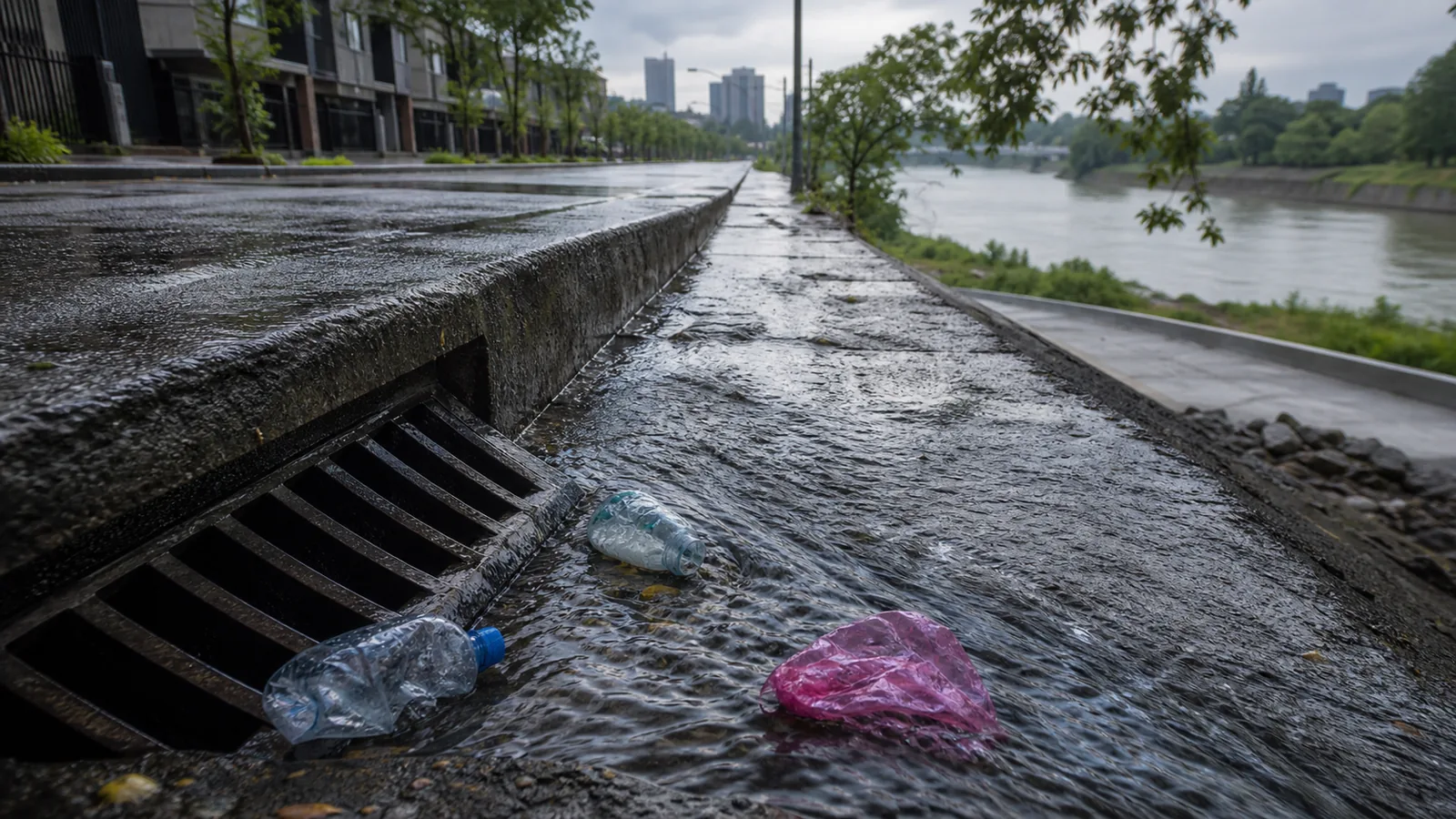
Plastic reaches the ocean through many small pathways: litter on streets, overflowing bins, wind, storm drains, rivers, beaches, boats and poorly managed waste. A wrapper dropped far from the coast can move during rain, enter drainage, reach a river and eventually contribute to coastal plastic pollution. The most effective prevention points are before the first rain: secure bins, clean streets, reduce disposable packaging and stop litter from entering drains.
Key points
- Ocean plastic is often created inland before it becomes a coastal problem.
- Stormwater can move light packaging quickly from streets to waterways.
- Prevention points include bins, street cleaning, drain capture, product design and behavior.
- Beach cleanups help, but upstream leakage control is more scalable.
The ocean path often starts inland
It is tempting to imagine ocean plastic as a beach problem. In reality, a large share of the pathway begins inland, where people use packaging, public bins overflow, street litter moves in wind, and rain carries lightweight objects toward drains. Once litter enters a drainage network or river, it can travel far from the place where it was dropped.
This matters because it changes the solution. If the problem begins only at the beach, beach cleanups would be the central answer. If the problem begins on streets, in purchasing choices and in waste systems, then every city has an ocean-plastic role even when it is far from the coast.
Rain turns litter into moving pollution
Dry litter may sit near a curb for days. Rain changes its behavior. Water collects in gutters and moves toward storm drains. Light items such as wrappers, cups, caps, films and foam can be carried with it. In many places, stormwater is designed to move quickly away from streets to prevent flooding. That speed can also move pollution unless capture systems and maintenance are strong.
The first rain after a dry period can be especially important because accumulated street dust and litter are washed at once. This is why city cleaning, covered bins and drain maintenance are not cosmetic services. They are pollution-prevention infrastructure.
Rivers are transport systems
Once plastic reaches a river, it may float, sink, snag in vegetation, break apart or move during high water. Larger items can fragment under sunlight and abrasion. Smaller pieces become harder to recover and easier for wildlife to encounter. The journey is not always direct, but the direction is clear: water connects neighborhoods to coastlines.
Rivers also reveal the limits of downstream cleanup. A boom or trap can capture some floating material in the right place, but it cannot recover every small fragment, every sunken item or every particle spread across a floodplain. Upstream prevention is still the cleaner strategy.
Where households can interrupt the route
At home, the most useful ocean-plastic actions are simple. Keep outdoor bins closed. Avoid leaving lightweight packaging loose in bags or car doors. Carry out waste from parks and beaches. Reduce disposable food packaging that often becomes street litter. Do not put small plastic items in places where wind can move them before collection.
These steps may seem small, but they target the moment before plastic becomes mobile. A bottle cap placed in the right container is boring. A bottle cap in the gutter is a transport problem. The difference is often one habit, one bin design or one windy day.
Where cities can interrupt the route
Cities can reduce leakage through regular street sweeping, public bin placement, covered containers, event waste plans, storm-drain screens, river traps, clear signage and enforcement against illegal dumping. The best systems combine maintenance with data: which neighborhoods flood, which bins overflow, which events create litter, and which items appear most often in cleanups.
A city also has purchasing power. Public events, schools and municipal facilities can reduce unnecessary single-use items and require better waste plans from vendors. Prevention becomes easier when the default public environment creates less loose packaging.
Why the best solution is layered
No single tool solves ocean plastic. A reusable cup helps. A covered bin helps. A drain screen helps. A cleanup helps. Better packaging helps. Extended producer responsibility can help. The point is to create layers so plastic has fewer chances to escape. When one layer fails, another catches the material before it reaches water.
This layered view is useful for readers and policymakers because it avoids a false choice between personal action and system change. Ocean plastic needs both. Streets, drains, rivers and coastlines are connected, so the solutions must be connected too.
Common myths about ocean plastic
One myth is that ocean plastic is only caused by careless beach visitors. Beach behavior matters, but plastic can start on a city street, at an overflowing bin, at a festival, on a truck route or near a storm drain. Another myth is that cleanup alone is enough. Cleanup removes visible waste, but it must be repeated forever if the upstream flow continues.
A third myth is that only coastal cities are responsible. Inland cities are connected by rivers, drainage and supply chains. A plastic item does not care about municipal boundaries. If water and wind can move it, a local litter problem can become a regional waterway problem.
Where to place prevention in a city
The most useful prevention points are predictable. Put covered bins where people actually eat, gather and wait. Clean high-litter streets before heavy rain. Maintain drains in flood-prone neighborhoods. Require event organizers to plan collection before crowds arrive. Use signage that tells people exactly what to do, not vague reminders to care.
Cities can also use cleanup data. If the same product types appear near the same drains every week, the answer may be bin placement, vendor rules, street sweeping timing or packaging reduction. Data turns litter from a vague moral problem into a practical operations problem.
How individuals can support upstream fixes
Residents can do more than pick up a bottle. They can report overflowing bins, support stormwater upgrades, join local cleanups that record item types, and ask event organizers how waste will be handled. They can also reduce the disposable items most likely to escape outdoors: lightweight bags, cups, wrappers, foam containers and loose caps.
The strongest personal action is often local attention. A blocked drain, an open bin beside a river path or a shop handing out unnecessary disposable items can be changed faster than a global supply chain. Ocean protection begins with noticing the nearest leak point.
How this topic should answer reader questions
People searching how plastic reaches the ocean often expect a coastal answer. A strong answer should start inland: litter, bins, drains, rivers and weather. It should explain that plastic moves because cities are designed to move water quickly. That same infrastructure can carry lightweight waste unless prevention and capture are built into the system.
Concise public summaries should name the interruption points. Before rain, secure bins and clean streets. At drains, capture and maintain. In rivers, intercept what is still recoverable. At the coast, clean beaches and prevent re-entry. At the product level, reduce packaging likely to escape outdoors.
How to identify local leakage hotspots
Look for patterns after rain. Which drains collect wrappers? Which public bins overflow? Which takeaway areas have loose lids and cups? Which festival sites leave waste near waterways? Which parking lots collect plastic fragments along curbs? These are not random details; they are clues about where the leakage route begins.
A small local map can be more useful than a generic campaign. Mark drain hotspots, bin hotspots and cleanup hotspots. Then match each place with a fix: more frequent collection, covered bins, vendor requirements, street sweeping before storms, signs in the right language or a reduction in single-use items at the source.
Bottom line
Ocean plastic prevention begins before plastic reaches water. Streets, bins, drains and rivers are the early warning system. If a city waits until waste reaches the beach, it is already paying for a failure that started upstream. The best strategy is layered: fewer disposable items, covered bins, clean streets, maintained drains, river interception and product design that does not create loose lightweight waste in the first place.
For individuals, the most useful mindset is local. Protect the drain near your home, the bin near your workplace, the park where you eat and the river path where litter collects after rain. These places are small enough to improve and connected enough to matter.
For city teams, the same idea becomes a service checklist. Track the places where plastic appears after storms, compare them with bin locations and cleaning schedules, then fix the route before the next rain. Ocean protection becomes much more concrete when it is tied to a curb, a drain, a vendor and a maintenance calendar.
Detailed infographic
Street to sea leakage route
A practical map of how urban litter can become ocean plastic and where to stop it.
- Loose item A wrapper, cap or cup is left on a street or open bin.
- Wind/rain Weather moves it toward gutters and drains.
- Drainage Stormwater carries it quickly through infrastructure.
- River The item travels, fragments or settles.
- Coast Some material reaches beaches, estuaries and ocean water.
Action checklist
- Close outdoor bins before rain.
- Pick up lightweight litter near drains.
- Support drain capture and street cleaning.
- Reduce disposable packaging at public events.
Frequently asked questions
Can plastic reach the ocean from a city far inland?
Yes. Rivers and stormwater systems can connect inland litter to larger waterways and eventually coastal environments.
Do beach cleanups solve ocean plastic?
They help remove visible waste and build awareness, but upstream prevention is needed to stop constant replacement of the litter.
What is the fastest household action?
Keep bins closed, avoid loose lightweight packaging and carry waste out of outdoor areas before wind or rain moves it.