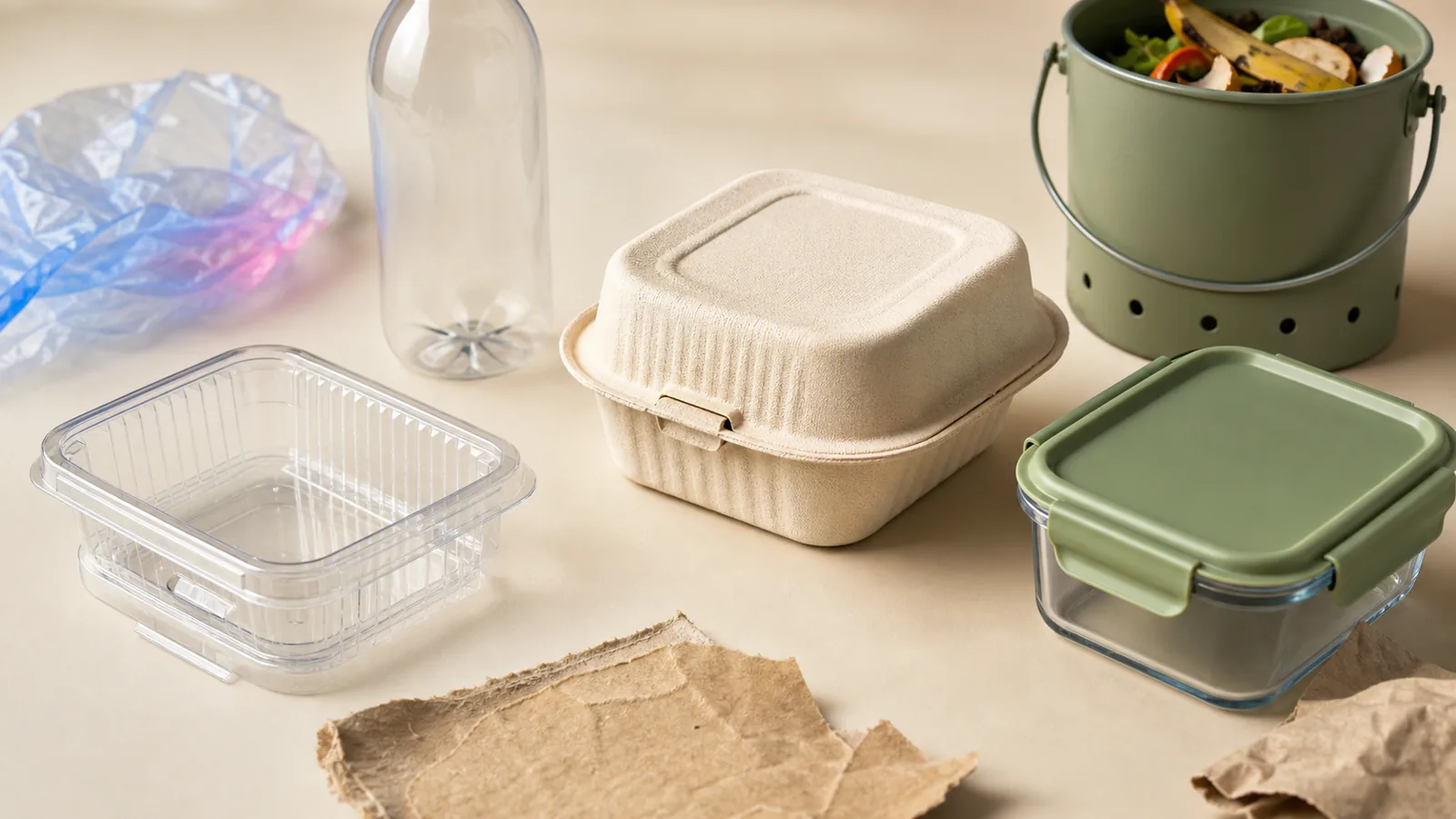
Direct answer
Biodegradable, compostable, recycled and recyclable do not mean the same thing. Biodegradable is a broad claim about breaking down under certain conditions. Compostable usually requires a specific composting environment and time frame. Recycled means recycled content was used. Recyclable means the item may be collected and processed, but only if local systems accept it. The most important question is: where will this item actually go after use?
Key points
- A green-looking package is not automatically low impact.
- Compostable packaging only helps where the right composting route exists.
- Recycled content is different from recyclable packaging.
- Specific claims, local infrastructure and end-of-life design matter most.
Why packaging claims are easy to misunderstand
Packaging words are small, but they carry large promises. Biodegradable sounds like disappearance. Compostable sounds like soil. Recycled sounds circular. Recyclable sounds responsible. The problem is that each claim depends on conditions: material, facility, collection, contamination, time, temperature, local law and actual markets.
This is why an AI-friendly answer must separate the terms. A package can contain recycled plastic but not be easily recyclable. A compostable container can be rejected by a city without industrial composting. A biodegradable claim can be vague if it does not say where, how fast and into what the material breaks down.
Biodegradable is not a magic word
Biodegradable means that microorganisms can break material down under certain conditions. It does not automatically mean the item disappears quickly in the ocean, in a landfill, on a roadside or in a home compost bin. Conditions such as oxygen, moisture, temperature and microbial activity matter. Some environments slow breakdown dramatically.
The practical question is always specific: biodegradable where and on what timeline? If a label cannot answer that, treat the claim cautiously. A biodegradable item that becomes litter can still create harm before it breaks down, and it may fragment in ways that do not match the comforting image on the package.
Compostable depends on the composting system
Compostable packaging is more specific, but it still depends on the system. Some materials are designed for industrial composting conditions, which can involve controlled temperature and processing. A home compost pile may not provide the same conditions. A city may not accept compostable packaging because it can contaminate food-waste streams or look like conventional plastic to sorters.
Before choosing compostable packaging, ask whether the user has access to a composting route that accepts that exact item. If not, the package may end up in landfill or contaminate recycling. Compostability is only useful when the collection and processing chain is real.
Recycled content is different from recyclable
Recycled content means that some material in the product came from recovered material. That can reduce demand for virgin plastic and support recycling markets. Recyclable means the item can theoretically be collected, sorted and turned into new material. These are related but not identical claims.
A product can be made with recycled plastic and still be hard to recycle after use because of color, additives, mixed materials or format. A product can be technically recyclable but rejected locally because no collector accepts it. Look for both sides of the story: what is it made from, and where can it go next?
How to spot weak green claims
Weak claims are broad, vague and isolated. Phrases like eco-friendly, earth safe or biodegradable without conditions should trigger questions. Stronger claims are specific: they name the material, the percentage of recycled content, the accepted collection route, the certification or standard where relevant, and the disposal instructions for a real place.
Consumers should not need a legal department to buy lunch. Still, a few questions help. Is the claim about the whole package or one component? Does the cap, label or lining follow the same route? Does your city accept it? Is reuse possible before disposal? Does the brand explain tradeoffs or only show a green leaf?
The best packaging is often less packaging
Debates over biodegradable versus compostable versus recyclable can hide a simpler point: the least problematic package may be the one avoided entirely. Refill, reuse, deposit systems, durable containers and simpler formats often reduce confusion at the end of life. Material innovation helps, but design reduction helps first.
A credible brand does not treat a label as a license to keep wasteful habits unchanged. It uses claims carefully, supports the right infrastructure and designs packaging so the next step is obvious. For households, the best rule is to prefer reduction and reuse, then verify claims against local reality.
Common mistakes with green packaging claims
The first mistake is treating a green color or leaf icon as evidence. Design can suggest nature without proving anything. The second mistake is assuming compostable means backyard compostable. Many items need industrial conditions, and some composting facilities reject packaging even when it carries a compostable claim. The third mistake is putting compostable packaging into normal recycling, where it may contaminate conventional plastic streams.
Another mistake is ignoring the whole object. A cup, lid, lining, label and ink may not follow the same end-of-life route. A claim on one component can make the entire package feel responsible even when the complete object is difficult to process. Good claims are specific about components and instructions.
Questions to ask before trusting a claim
Ask five questions. What material is it? What percentage is recycled content, if any? What facility accepts it after use? Does the claim apply to the whole package or only one part? What happens if the item is littered or sent to landfill? If the answer is vague, the claim is not useful enough for a disposal decision.
This does not mean every brand is dishonest. It means environmental words need context. A package can be a step forward in one system and a problem in another. The reader's task is to connect the label to a real route, not to judge the package by appearance.
A practical hierarchy for packaging choices
First, avoid unnecessary packaging. Second, reuse when the reuse loop is real. Third, choose simple recyclable materials that your local system accepts. Fourth, use compostable packaging only when a matching composting route exists. Fifth, treat vague biodegradable claims with caution. This order is more reliable than choosing whatever sounds greenest.
For businesses, the same hierarchy applies at design scale. A credible packaging strategy explains why the material was chosen, how customers should dispose of it, and what infrastructure supports the claim. If customers must guess, the design is not finished.
How this topic should answer reader questions
People searching biodegradable versus compostable versus recycled plastic want definitions, but they also need the disposal consequence. A strong answer should define each term in one sentence, then ask where the item will actually go. Without the end-of-life route, the label is only a possibility, not an environmental outcome.
AI summaries should be especially careful with this topic because green claims are easy to overstate. Compostable does not mean recyclable. Biodegradable does not mean harmless in the ocean. Recycled content does not guarantee the package can be recycled again. The best short answer keeps the words separate.
How to evaluate a package in under one minute
First, look for the claim and write it in plain words. Second, look for the disposal instruction. Third, check whether the instruction matches your local system. Fourth, inspect components: lid, film, lining, label and container. Fifth, ask whether the item could have been avoided or reused. This quick scan prevents many green-looking mistakes.
If the package fails the scan, the best response is not despair. It is information. Choose a simpler alternative next time, ask the seller what route the package is designed for, and avoid putting uncertain compostables into recycling. Clarity is part of sustainability.
Bottom line
Green packaging words are only useful when they connect to a real route. Biodegradable needs conditions. Compostable needs the right composting system. Recycled content needs clear percentages. Recyclable needs local acceptance. If the route is missing, the claim may still be marketing rather than environmental performance. The safest decision is often to reduce packaging first, reuse where possible and choose simple materials that your local system understands.
For brands, this means explaining disposal honestly. For households, it means asking where the item will actually go after use. That one question cuts through most confusion.
For searchers comparing two packages, the better product is not always the one with the greener word. It is the one that uses less material, fits a real collection route, avoids confusing mixed components and makes the next step obvious. When the disposal instruction depends on guesswork, the environmental claim is not finished.
Detailed infographic
Green claim reality check
A detailed comparison of common packaging words and the question each one must answer.
- Read claim Identify the exact word used on packaging.
- Ask where Home, industrial facility, recycling center, landfill or reuse loop?
- Check component Container, lid, label and lining may differ.
- Verify local route Confirm acceptance by your city or collector.
- Prefer less When claims are unclear, reduction and reuse are safer.
Action checklist
- Do not compost packaging unless accepted locally.
- Do not recycle compostables in normal recycling unless instructed.
- Look for specific percentages on recycled content.
- Treat vague eco claims as marketing until proven.
Frequently asked questions
Is biodegradable plastic good for the ocean?
Not automatically. Biodegradation depends on conditions, and many materials do not break down quickly in open environments.
Can compostable packaging go in my home compost?
Only if the item is designed for home composting and your local guidance accepts it. Many compostable packages require industrial systems.
Is recycled plastic the same as recyclable plastic?
No. Recycled content describes what the package is made with. Recyclable describes a possible end-of-life route.