Direct answer
Follow the instructions for the service collecting your packaging. Where accepted, empty and prepare a plastic bottle as directed, then screw its own cap back on. Loose caps, flat tub lids, pumps, carton closures and metal lids can have different rules. Check a specialist collection before saving separate pieces, and do not assume a resin number or a recyclable claim guarantees local acceptance or final recycling.
Key points
- Check the actual collection service before choosing caps on or caps off.
- A screw cap, flat lid and dispensing pump are different sorting questions.
- Keep small loose pieces contained; do not improvise bundles or bottle stuffing.
- Collection acceptance and confirmed reprocessing are different outcomes.
- Refill, suitable reuse and replacement parts can reduce repeat packaging.
Caps on or caps off? Start with the service collecting your bottle
For an empty plastic drinks bottle, the useful answer is usually a short instruction from the organisation collecting it. Where that service says to replace the screw cap, empty the bottle, prepare it as directed and screw its own cap back on. Where it gives a different instruction, follow that instruction. Do not turn a familiar slogan into a rule for every container in the kitchen. A milk bottle, a yoghurt tub, a glass jar and a soap pump can travel through different sorting routes even when their closures look similar.
The U.S. Environmental Protection Agency says bottle caps and labels can typically remain on plastic bottles, while explicitly directing readers to check their local programme. That qualification is the important part. This guide uses current public guidance checked on November 19, 2026, with examples from the United States and the United Kingdom. Those examples show how to make a decision; they do not establish the rules for your address. Start with your council, municipality, building waste manager or contracted recycler, and use the instructions for the actual bin you will use.
Identify the closure before looking for a recycling symbol
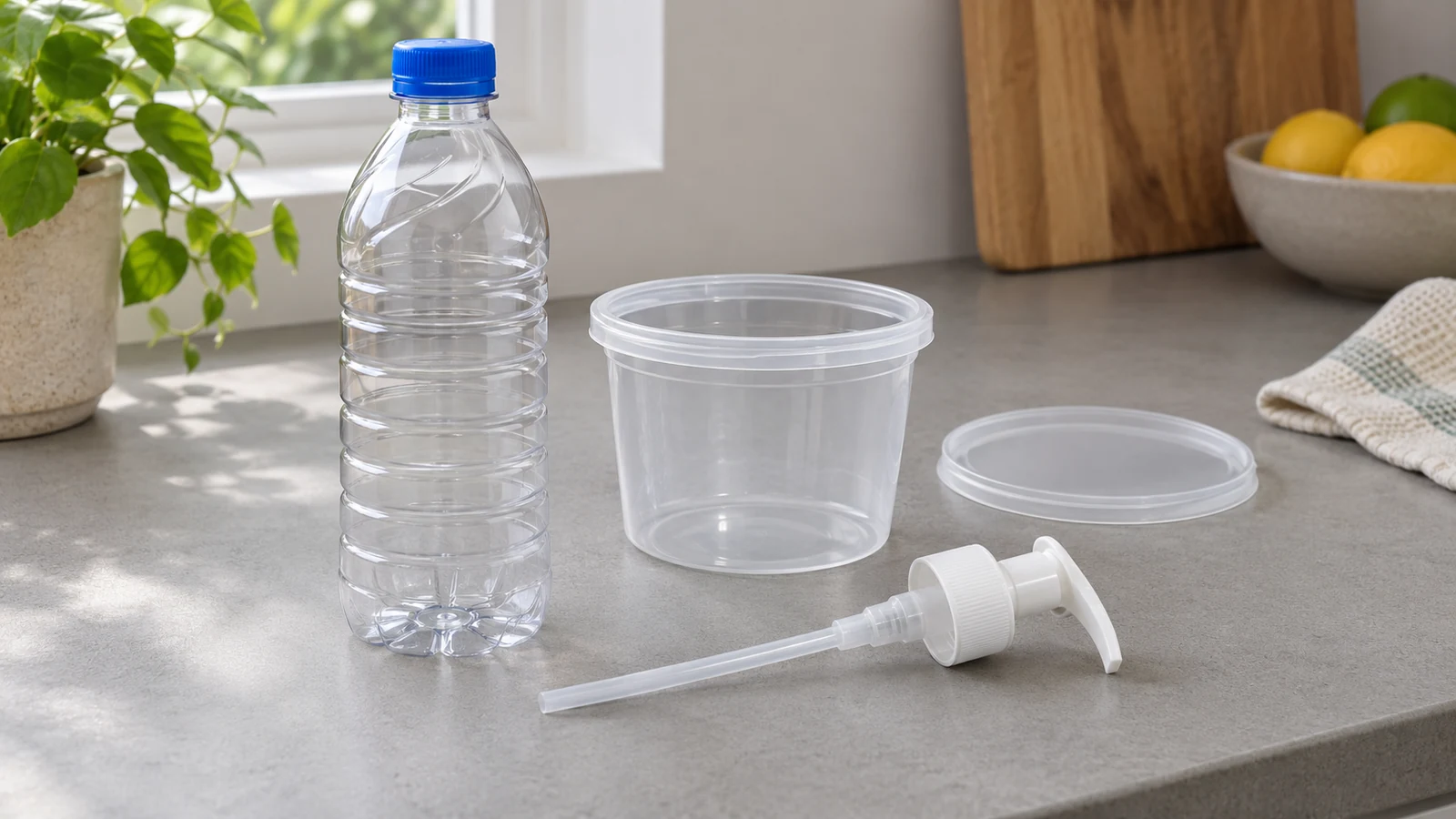
Set an empty container on the counter and identify what closes it. A screw cap has threads that fasten around a bottle neck. A flat tub lid clips onto a broad rim. A dispensing pump contains a moving mechanism; a spray trigger has another mechanism again. A foil freshness seal is a separate piece of packaging. These descriptions help you ask a precise question. Saying you have a plastic lid may otherwise produce an answer intended for a completely different object. Keep the bottle and its closure together while you check.
Record the material marking if one is visible, but do not assume the number on the bottle describes the cap. EPA explains that resin identification symbols do not guarantee acceptance by a community recycling service. A container may have a marked body and an unmarked closure. Rather than testing the plastic by burning it or guessing from its colour, send the receiving service a photograph of the whole package and the underside of the lid. Include its previous contents, approximate size and whether the cap still attaches securely.
Understand plastic recycling symbols. Use a material code to frame a question, then check the receiving service.
Why small caps and flat lids can cause different sorting problems
Sorting equipment handles objects as well as materials. Recycle Now, the UK campaign operated by WRAP, explains its lid-on labelling advice by pointing to small closures passing through screens. Its symbols guide refers specifically to caps and lids below 40 millimetres. That measurement belongs to the guidance being explained; it is not a universal minimum for every recycling plant. Attaching an appropriate cap to an accepted bottle can help the small item travel with a larger one through initial sorting. It does not make an otherwise rejected bottle acceptable.
Flat lids present a different difficulty. Oregon's RecycleOn programme explains that their shape can lead sorting machinery to confuse them with paper. This is why a container body and its lid can receive different instructions. A broad lid is not automatically accepted simply because it is larger than a bottle cap. For a household, the practical response is to keep separate entries for screw caps, loose caps, flat lids and dispensing mechanisms on a sorting note. A single instruction reading 'all plastic lids' conceals the differences that the collector needs you to observe.
Different plastics do not always need separating at home
A cap and a bottle can be made from different polymers without requiring you to dismantle them for collection. A July 2021 NRRA technical account hosted by NH Recycles describes recovery systems in which shredded PET sinks while polyethylene and polypropylene float. Suitable processors can use that difference to separate materials. This is an explanation of an industrial process, not a recipe for household treatment, and it does not describe every facility. Do not shred bottles, melt caps or improvise a home separation process for ordinary recycling.
The same account also records an important limitation: one vendor accepted caps in bottle bales but did not recycle the cap material, while another had a market for recovered caps. Those named arrangements are historical examples, not verified current vendor offers. They demonstrate why 'accepted for collection' and 'successfully recycled' should remain separate statements. Follow the current preparation rules, but avoid promising a particular final product or a complete recovery rate unless the operator supplies evidence for that outcome. Good sorting improves the handoff; it cannot certify the whole downstream chain.
A real example: Portland separates the cart from the drop-off route
Portland, Oregon, currently permits screw caps on accepted plastic containers in its regular recycling service. Its guidance requires the container to be at least two inches by two inches and excludes loose plastic caps and lids that are not screwed on. The city also directs residents to rinse containers and leave them free of food residue and dry. These are Portland instructions, not a national United States rule. The distinction makes a useful example: putting a loose cap beside an accepted bottle does not satisfy a requirement to screw it onto that bottle.
A separate Portland announcement, updated November 1, 2026, describes RecycleOn drop-off locations for materials that do not belong in the home recycling bin, including plastic lids. It tells readers to check current opening hours and directs businesses with large volumes to discuss alternative arrangements. The broader lesson is to identify the route as well as the material. A collection point down the road may accept something that your normal bin rejects. Conversely, a drop-off announcement does not change the contents allowed in your regular recycling cart.
Prepare bottles without inventing extra processing steps
For ordinary food and beverage packaging, use up the contents first and follow the local emptying and rinsing instructions. Set aside any bottle with unknown or hazardous residues for the appropriate specialist advice. This guide is not permission to pour chemicals into a drain or to wash a restricted container into eligibility. For accepted packaging, keep the task proportionate: remove remaining drink or food, allow drainage where required, then replace the cap if that is the instructed method. Put a small reminder where bottles are emptied so preparation happens before the family recycling bag fills up.
Check crushing separately. Recycle Now's UK bottle page advises squashing bottles, leaving labels in place and replacing tops; that does not establish the requirements of a deposit machine or another country's collection. Keep a returnable bottle in the form required by its scheme until you have checked. Likewise, do not automatically peel every label or detach a tethered cap. Extra effort is only helpful when the receiving process needs it. A useful household routine follows a short verified sequence, rather than adding washing, cutting, bagging and dismantling steps remembered from unrelated advice.
Check how bottle deposit-return systems work. Read the scheme instructions before crushing or altering a returnable container.
Treat pumps, spray heads and carton caps as separate questions
A soap pump should not be treated as a large screw cap merely because it unscrews. Moving dispensers can combine several materials and small components. Recycle Now's bottle guidance excludes detergent and soap pumps while allowing triggers on certain cleaning-product bottles. This is a particularly clear reason to avoid a blanket rule for all dispensing parts. Read the exact product example and then check your own collection. If the supplier offers a refill specifically intended for the existing dispenser, retaining a sound, compatible pump may be more useful than looking for a disposal route after every purchase.
A closure attached to a beverage carton also needs carton-specific guidance. Do not infer its preparation from the rule for a plastic drinks bottle: the main package enters a different material stream. The same caution applies to a plastic closure on a glass container and to metal jar lids. Search using both parts of the package, such as 'carton with plastic cap' or 'glass jar with metal lid'. If an instruction is ambiguous, ask the operator to confirm which component stays attached. Keep the answer with your household sorting note instead of relying on the packaging's appearance.
How to use a specialist cap or lid collection responsibly
Check eligibility before building a stockpile. RecycleOn's Oregon lid-and-cap page, for example, accepts clean, dry items marked with resin codes 2, 4 or 5 and excludes PET lids, dispensing mechanisms and several other closure types. Those restrictions belong to that programme. Another community project might accept a different material, a narrower product list or no household donations at all. Find the current official list, ask how unmarked items are handled and confirm whether a collection is still active. An old social post about a school fundraiser is not enough to start sending material.
Then plan the handoff. Ask whether material must arrive loose, in a reusable container or in a specified bag, and whether there is a quantity limit. Keep accepted items clean and contained during storage and transport. Label a small box with the destination and a realistic delivery date; avoid an indefinite collection that occupies shared space without an owner. If the receiving point closes, recheck the route before recruiting more contributors. Where no suitable service is available, follow the local managed disposal instruction instead of putting rejected caps into ordinary recycling in the hope that someone will sort them out.
Why stuffing loose caps inside a bottle is not a general solution
Putting many loose caps inside a bottle may seem to solve the size problem, but it also changes the item you are handing over. A rule allowing the bottle's own screw cap does not automatically authorise a container packed with unrelated pieces. The same is true of taping lids together or enclosing them in another material. These are different preparations, and the operator may not want them. Ask about the exact method before using it. A photograph of a clever collection trick online tells you little about whether your receiving plant can handle the resulting bundle.
Use a storage container for transport if the drop-off programme requests one, but distinguish that container from material intended to enter the recycling process. Empty it as directed and take it home when appropriate. At a shared collection point, a clear sign can prevent the storage box itself from becoming an assumed packaging instruction. Keep instructions short: identify the accepted items, show the required condition, name the destination and give a contact for uncertain pieces. This is an editorial suggestion for organising a collection, not a claim that every recycler uses the same handling method.
Keep tethered caps useful and loose pieces contained
When a bottle has a cap designed to remain attached, use the closure as intended and keep the package together while checking its disposal route. An attached cap is easier to keep track of during a picnic or journey. Do not deliberately tear it off simply because you remember older advice to separate caps. If it has already detached, the receiving service's loose-cap rules still matter. A damaged fastening does not become secure because the two pieces were placed near one another. Put them safely aside while confirming the appropriate preparation or disposal route.
For an outdoor event or shared break area, make the emptying and collection point easy to use. Provide clear pictures of the actual containers being supplied, keep bins from overflowing and assign someone to check the area after the event. If a cap is dropped, pick it up when it is safe to do so; do not sweep small pieces toward a drain. These are practical housekeeping steps, with no claim about a measured pollution reduction. The aim is to prevent avoidable loss during a task you control, while preserving the collector's instructions for what happens next.
Check green claims against the whole package and a real destination
A recyclable bottle is not proof that every attached component reaches recycling. Nor does recycled content establish what happens after your next use. The U.S. Federal Trade Commission's Green Guides summary distinguishes these claims and calls for clear qualifications when access to recycling facilities is limited. It also cautions against broad environmental benefit claims. This is U.S. marketing guidance; it is used here as a useful checking discipline, not legal advice for every jurisdiction. Ask what the claim covers: the bottle body, the cap, a stated share of the package or a complete collection system.
For a supplier or fundraiser, request a concrete explanation of where material goes and which evidence supports the advertised outcome. A receipt can show that a batch was collected without proving that every piece became a new item. A photograph of a bench made with recycled plastic does not establish that your donated caps entered it. Record what is known and describe it narrowly. If a project can document collection but not reprocessing, say so. Do not convert a good intention, a resin number or a take-back logo into a guarantee that no waste remains.
Examine plastic packaging greenwashing claims. Separate a material claim from proof of collection and processing.
Make the household decision once, then keep it easy to update
Choose three packages that regularly appear in your home: perhaps a drinks bottle, a yoghurt tub and a hand-soap bottle. Look up each complete package in the instructions for your actual collection. Write down the rule for the body and the closure, plus the date you checked. A note might say that a particular screw cap goes back onto its bottle while a particular flat lid goes elsewhere. Use your own verified answers, rather than copying an example from this article. Keep photographs if several similar packages have different instructions.
Place the note near the sorting area and test whether another household member can follow it without asking you. If the answer requires several exceptions, show the package rather than relying on a long description. Recheck when you move, change waste services, see an official notice or start buying a different container. At an apartment building, confirm whether the communal service follows the same rules as household collections in the surrounding area. This small maintenance task is more useful than repeatedly debating general caps-on advice whenever someone empties a bottle.
Reduce repeat packaging while keeping useful closures in service
Once sorting is settled, look at the repeated purchase that creates the caps. A reusable bottle used for suitable drinking water, a compatible refill for an existing dispenser or a genuine returnable package may reduce the number of disposable closures entering your home. Start with equipment you already own and can maintain. Replacing everything with a new collection of containers can create another purchasing problem. Choose one routine where refill or return is convenient, affordable and compatible with hygiene requirements, and see whether people actually continue using it.
For a durable food container with a damaged lid, check whether the manufacturer supplies a compatible replacement. A replacement closure can keep a useful container working, but an improvised lid may not seal properly or suit the intended temperature and contents. Follow the product's use and care instructions. Keep spare parts only when they have an identified purpose, and avoid a drawer of unmatched caps collected out of obligation. The useful outcome is repeated service from a container that works, followed by an appropriate route when its parts genuinely reach the end of their life.
Make refill and reusable packaging work. Plan cleaning, compatibility and a convenient return or refill routine.
A practical checklist for the next bottle, tub or pump
First, identify the complete package and the closure type. Second, find the current instructions for the service or deposit scheme you will actually use. Third, confirm preparation: emptying, rinsing, drying, crushing and cap position are separate questions. Fourth, keep any specialist collection separate from the ordinary bin and check its accepted list before making a trip. Fifth, keep loose pieces contained until the handoff. If the guidance is missing, ask a precise question with a photograph; do not treat uncertainty as permission to add an unfamiliar item to recycling.
Finally, choose one improvement beyond disposal. It could be correcting the picture on a shared bin, returning a compatible cap to its bottle, finding a replacement lid for a durable container or making a refill routine easier. For a community project, name who will deliver the collected material and retain the receiving record. Review rejected items and change the sign if people repeatedly misunderstand it. Success means a routine people can follow and a destination that actually accepts the material, with honest language about what is verified and what remains unknown.
Detailed infographic
One package, five checks before recycling
A decision sequence for household closures. Use the current instructions for your own receiving service; examples elsewhere are not local permission.
- Identify Name the body, closure, material marking and previous contents.
- Check Use the current list for your bin, deposit scheme or drop-off point.
- Prepare Follow the specified emptying, rinsing, drying and cap instructions.
- Contain Keep loose pieces secure; avoid unapproved bundles and bottle stuffing.
- Confirm Check acceptance at handoff and keep collection claims within the evidence.
Action checklist
- Does the guidance cover this exact package and closure?
- Is this ordinary recycling, deposit return or specialist drop-off?
- Have I checked whether caps stay attached and whether crushing is allowed?
- Are loose pieces stored safely until the confirmed handoff?
- Can a compatible refill or replacement part reduce the next purchase?
Frequently asked questions
Should I leave plastic caps on bottles for recycling?
Use your collection service's current instructions. Many services accept caps screwed onto empty plastic bottles, but that rule is not universal and does not automatically include loose caps or flat lids.
Can I recycle loose bottle caps in the ordinary bin?
Do not assume so. Check the specific loose-cap rule. Some programmes require caps to remain screwed onto an accepted bottle; others offer separate drop-off options with material restrictions.
Does the cap need the same recycling number as the bottle?
Not necessarily. Some industrial systems separate suitable cap and bottle plastics after shredding. Follow the receiving service rather than removing a cap solely because the materials differ.
Can yoghurt lids and soap pumps follow the same rule?
No single instruction covers every closure. Flat lids and pumps need separate checks. Pumps can contain mixed materials and small mechanisms; a bottle being accepted does not establish acceptance of its pump.
Should I fill an empty bottle with loose caps?
Only if the receiving programme specifically instructs you to do that. Permission to screw a bottle's own cap back on does not authorise stuffing it with unrelated pieces.
Does a charity cap collection prove my caps will become a bench?
No. Verify that the collection is active, accepts your items and identifies its receiving organisation. A collection receipt and evidence of final reprocessing support different claims.
Sources and further reading
- US EPA: common recyclables, bottle caps and resin symbols
- WRAP Recycle Now: plastic bottle preparation and dispensing closures
- WRAP Recycle Now: UK recycling labels and small lids
- City of Portland: current ordinary-bin recycling instructions
- City of Portland: RecycleOn drop-off announcement, updated November 1, 2026
- RecycleOn Oregon: accepted plastic lids and caps and exclusions
- NH Recycles: Confusion on Caps, historical technical account from July 2021
- US FTC: environmental claims and Green Guides summary