Direct answer
Plastic bottle deposit return systems add a small refundable value to beverage containers so people have a reason to bring bottles and cans back instead of dropping them into mixed bins, streets or beaches. A strong system can raise collection, keep PET bottles cleaner for recycling and reduce litter, but it does not automatically solve overproduction, poor packaging design, mixed materials, weak refill systems or misleading green claims. Deposits work best when they are simple to use, widely available, transparent about what is collected and connected to reduction, reuse and producer responsibility.
Key points
- A deposit is a collection tool: it gives bottles and cans a visible return value before they become litter or low-quality mixed waste.
- The strongest programs make return points convenient, accept the common beverage formats and publish clear collection and recycling data.
- Deposit return does not make every plastic bottle sustainable; it still depends on design, caps, labels, recycled-content markets and total consumption.
- Reuse and refill systems can complement deposits, but they need washing, logistics and repeated trips rather than only a recycling message.
- Green claims around bottle collection should be specific: collected, sorted, recycled into what, and how much material stays in a closed loop.
Related Plastika Problema reading
- Plastic recycling symbols explained - why PET and other resin codes are only the first clue for recovery
- Extended producer responsibility for plastic packaging - how producer-funded systems connect to collection and reporting
- Reusable packaging and refill systems - where returnable packaging becomes reuse rather than one-way recycling
- Plastic packaging greenwashing claims - how to test claims about recycled content and recyclability
- Plastic types guide - site guidance on PET, HDPE and other common plastic categories
Why deposits are different from ordinary recycling bins
A normal recycling bin asks people to do the right thing with little immediate feedback. A deposit return system changes the decision by attaching a small refundable value to the container. The bottle is no longer only waste after the drink is finished. It is a small piece of recoverable value that can be returned through a shop, machine, depot or collection point. That behavioral shift is why deposits are often discussed in plastic policy, even though they are only one part of the system.
The practical advantage is quality as much as quantity. Beverage containers returned through a dedicated route can be cleaner and more predictable than containers collected from mixed public bins. Clear PET bottles, for example, are easier to sort and recycle into higher-value applications when they are separated from food residue, broken glass, mixed films and random household waste. Better collection does not guarantee perfect recycling, but it gives the recovery chain a better starting point.
What a deposit return system actually does
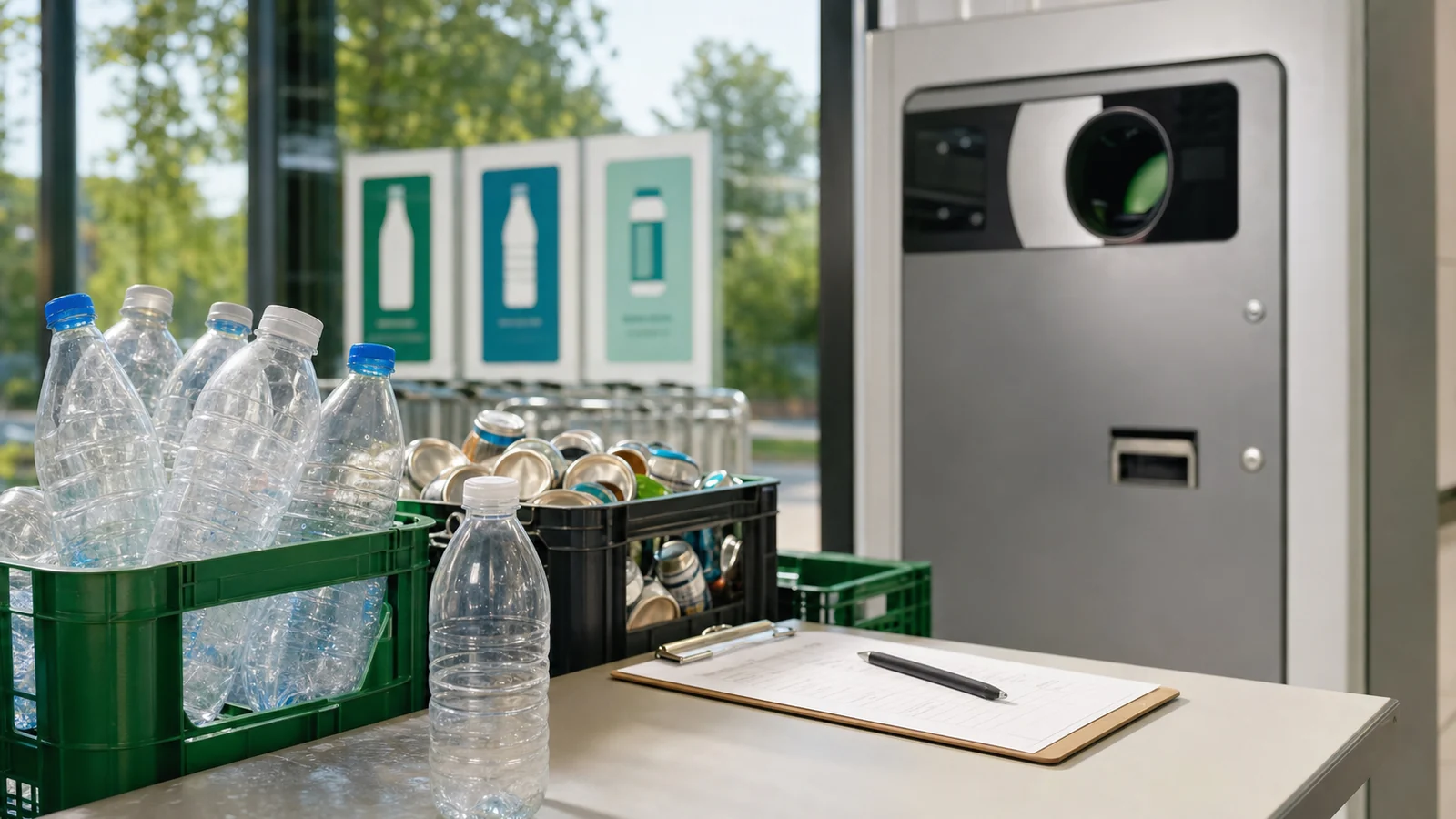
A deposit return system usually has five parts: covered containers, a refundable deposit, return locations, counting or verification, and a route for sorting and processing. Consumers pay the deposit when buying the drink and get it back when they return the eligible container. Producers, retailers, operators or public authorities then manage the logistics and data. The exact structure varies by country or city, but the core idea is simple: return the container and recover the value.
That simplicity matters because confusing waste systems lose participation. If people cannot tell which bottles qualify, where to return them, whether caps should stay on, or how refunds are paid, the system becomes a special errand rather than a normal habit. A strong system is visible at the places where beverages are bought and consumed. It should work for commuters, households, students, tourists, small shops and people without a car, not only for highly motivated recyclers.
Why plastic bottles are a common target
Plastic beverage bottles are visible, common and mobile. They are bought away from home, carried outdoors, dropped into bins at transport stops, taken to parks and beaches, and sometimes left near drains. When they leak into streets or waterways, they can break apart, harm wildlife, block drains and contribute to the wider plastic pollution problem. A deposit gives that bottle a reason to move back into a collection route before weather and handling turn it into a harder problem.
Bottles also have a clearer material pathway than many flexible or multilayer packages. A PET bottle is not automatically recycled just because it carries a resin code, but it is often more sortable than a laminated pouch, sachet or greasy food container. That makes beverage containers a practical place to build a dedicated system. The lesson should not be that bottles are harmless. The lesson is that some packaging formats are easier to capture, measure and improve when the system is designed for them.
What official policy sources emphasize
The OECD describes deposit-refund schemes as a way to create an incentive for consumers to return products or packaging after use. That incentive is not magic; it is a policy design choice. It works only when the refund is high enough to notice, return locations are convenient, and the program has clear governance. UNEP has also highlighted bottle deposits as a practical tool for beating plastic pollution because the deposit value changes the container from abandoned waste into something people are more likely to bring back.
European packaging policy is moving in the same direction of higher collection expectations and producer responsibility. The European Commission's single-use plastics and packaging pages connect beverage container rules with collection targets, recycled-content requirements and broader prevention measures. For a public-information site, the important point is not to copy one jurisdiction. It is to understand the policy pattern: collection, design, reporting and reduction have to work together.
The bottle-to-bottle question
Many readers assume a returned plastic bottle becomes another bottle. That can happen, but it is not automatic. Bottle-to-bottle recycling depends on the material being collected cleanly, sorted accurately, processed safely and approved for food-contact use where applicable. Color, additives, labels, inks, caps, contamination and market demand all influence the final use. A bottle may become another bottle, a sheet, a fiber, a strap or a lower-value product depending on the system.
This is where honest language matters. Collected is not the same as recycled. Recycled is not the same as recycled into the same product. Recycled content is not the same as infinite circularity. Plastic degrades, systems lose material and some containers are rejected. Deposit return can improve the odds by keeping a cleaner stream, but public communication should still explain the route after collection rather than stopping at the return machine.
Deposit systems and greenwashing risk
A deposit logo can make a bottle feel responsible, even when the wider product is still single-use. That is the first greenwashing risk. A brand should not imply that a deposit erases the environmental impact of producing, filling, transporting and chilling disposable bottles. A deposit addresses the after-use collection route. It does not remove the need to reduce unnecessary packaging, improve refill access or use recycled content carefully.
The second risk is vague recovery claims. Phrases such as recyclable, circular, ocean-friendly or 100 percent responsible can mislead if they do not say what is actually happening. A stronger claim says the bottle is eligible for a deposit return program, the material is PET, the cap or label instructions are clear, and the operator publishes collection and recycling outcomes. Specific claims are less dramatic, but they help people make real disposal decisions.
How deposits connect to reuse and refill
Deposit return is often used for one-way containers that are collected for recycling. Reuse systems go further: the package is returned, washed, refilled and used again. Some beverage systems historically used refillable glass bottles with deposits, and some modern programs are testing reusable cups, crates or bottles. The difference is important. Recycling keeps material in use after processing. Reuse keeps the package in use before it becomes raw material again.
A reuse deposit needs a stronger logistics loop. Containers must be durable, standardized enough to wash efficiently, tracked through many trips and inspected for damage. If the container returns only once or needs long-distance cleaning that outweighs benefits, the reuse claim weakens. Deposits can support reuse, but reuse should be judged by return rate, trip count, cleaning method, transport distance and replacement losses.
What communities should check before launching a program
A community considering bottle deposits should start with the leakage problem it wants to solve. Are bottles common in street litter, beaches, rivers, parks, public bins or event waste? Which sizes and materials dominate? Where are people buying and consuming drinks? Which retailers can host returns? What happens to containers after collection? A program designed around local behavior will be easier to use than one copied from somewhere else without adaptation.
Equity also matters. Return points should not be concentrated only in wealthy shopping areas. Refund methods should be usable for people without a smartphone or bank account if the local context requires it. Small retailers need practical storage and pickup rules. Informal waste collectors, where they exist, should not be harmed by a formal system that captures value without considering livelihoods. Plastic policy works better when it sees the people who already handle waste.
What small businesses can learn from deposit logic
Even where no official bottle deposit exists, small businesses can borrow the logic. A cafe can track bottled drinks sold versus bottles returned to a clean collection point. A coworking space can place a clearly labeled bottle and can return station beside the exit rather than hiding bins in a back corridor. An event organizer can add a cup or bottle deposit so containers come back instead of scattering across the venue. The principle is the same: make the desired return visible, valuable and easy.
Businesses should be careful not to invent a token system that creates more confusion. If a deposit is used, staff need a simple rule, customers need clear signage and the collected material needs a real downstream route. A deposit that collects cups but sends them to mixed waste is not a sustainability system. It is a behavior experiment without the environmental follow-through.
A practical checklist for evaluating a bottle deposit system
First, check eligibility. Which bottles and cans are included, and are the rules easy to understand? Second, check convenience. Are return points near purchase points, public transport, schools, offices and high-consumption areas? Third, check the refund. Is it high enough to motivate returns but simple enough to administer? Fourth, check the material route. Where do containers go after return, and are outcomes published?
Fifth, check contamination and design. Are caps, labels and colors compatible with the intended recovery route? Sixth, check inclusion. Can tourists, elderly people, renters, small shops and low-income households use the system without special knowledge? Seventh, check prevention. Does the program also support drinking fountains, refill stations, reuse and reduction, or does it simply make single-use bottles feel more acceptable?
How consumers can use deposits well
For consumers, the best habit is to return containers promptly and cleanly. Keep a small bag, crate or collection spot near the door so bottles do not become clutter. Do not crush containers if the local system needs barcode or shape recognition. Follow cap instructions. Avoid mixing in non-eligible plastics, food waste or random packaging. A deposit system is easier to operate when people return the material it was designed to accept.
Consumers can also ask better questions. Does the store accept returns for what it sells? Does the brand use recycled content? Is tap water or refill available where safe? Is the bottle necessary, or is it just the easiest default? Deposits are useful, but the lowest-waste bottle is often the one that was not needed because safe refill or reusable access was available.
What to measure after launch
The headline metric is return rate, but it should not be the only metric. A serious program should also track containers placed on the market, containers returned, rejected material, contamination, material sent to each end use, litter trends, public-bin changes, retailer participation, convenience complaints and operating cost. If the return rate improves but total single-use bottle sales rise sharply, the public story is more complicated than success or failure.
Transparent reporting protects trust. People are more likely to participate when they can see that returned containers are actually managed. Reporting also helps policymakers adjust deposit values, add return points, fix confusing categories or address fraud. Measurement turns a deposit from a feel-good machine into a real waste-prevention instrument.
Where deposits fit in the plastic hierarchy
Deposit return belongs below prevention and reuse but above uncontrolled disposal. That hierarchy matters. First, avoid unnecessary bottled drinks where safe tap water or refill is available. Second, use durable refillable systems where the loop is convenient and well managed. Third, use deposits to capture one-way beverage containers before they leak. Fourth, recycle recovered material into the highest practical use. Last, dispose of rejected material responsibly.
This order keeps the public message balanced. Deposits are worth supporting when they reduce litter and improve collection. They should not become an excuse to ignore drinking-water access, refill infrastructure, overpackaging or misleading claims. The best bottle system is not the one with the nicest return machine. It is the one that reduces leakage, publishes honest data and helps society need fewer throwaway containers over time.
Bottom line
Plastic bottle deposit return systems are practical because they make collection visible, routine and valuable. They can keep beverage containers out of streets and waterways, improve material quality and support producer-responsibility goals. But they are not a full plastic pollution solution by themselves. They need good design, convenient access, transparent reporting, honest claims and a connection to reduction and reuse.
For readers, the useful takeaway is simple: return eligible bottles, learn the local rules, avoid wishcycling, and do not let a deposit logo make every disposable bottle feel harmless. For businesses and policymakers, the standard is higher: design the system so it is easy to use, hard to misunderstand and honest about what happens after the container comes back.
Detailed infographic
Deposit return system map
A simple flow showing how a bottle deposit turns a used container into a cleaner collection stream.
- Buy The consumer pays a small deposit with the beverage purchase.
- Use The bottle or can is kept separate after the drink is finished.
- Return A shop, depot or return machine accepts eligible containers.
- Sort Collected material is counted, cleaned, sorted and sent to a verified route.
- Report Operators publish return, rejection and recycling outcomes so claims stay honest.
Action checklist
- Make return points convenient near where drinks are bought and consumed.
- Keep eligibility rules simple enough for tourists and occasional users.
- Publish what was collected, rejected and recycled into new products.
- Use deposits alongside refill stations and packaging reduction.
- Avoid broad circular claims unless the material route is documented.
Frequently asked questions
What is a plastic bottle deposit return system?
It is a program that adds a refundable deposit to eligible beverage containers. The customer gets the deposit back when the bottle or can is returned through an approved collection route.
Do deposit return systems reduce plastic pollution?
They can reduce leakage and litter when return points are convenient, the refund is meaningful and the collected material is actually sorted and processed. They are strongest when combined with prevention, reuse and producer responsibility.
Does a returned bottle always become another bottle?
No. Bottle-to-bottle recycling depends on clean collection, sorting, food-contact rules, contamination, color, caps, labels and market demand. Some material may become other products or be rejected.
Are deposits better than curbside recycling?
They solve different problems. Curbside recycling can collect many household materials, while deposits create a cleaner, more targeted route for common beverage containers. Both need clear rules and verified downstream processing.
Can deposits support refillable bottles?
Yes, but refillable systems need durable containers, washing, tracking, repeated trips and return logistics. A deposit can motivate returns, but reuse is proven by actual trip count and system performance.