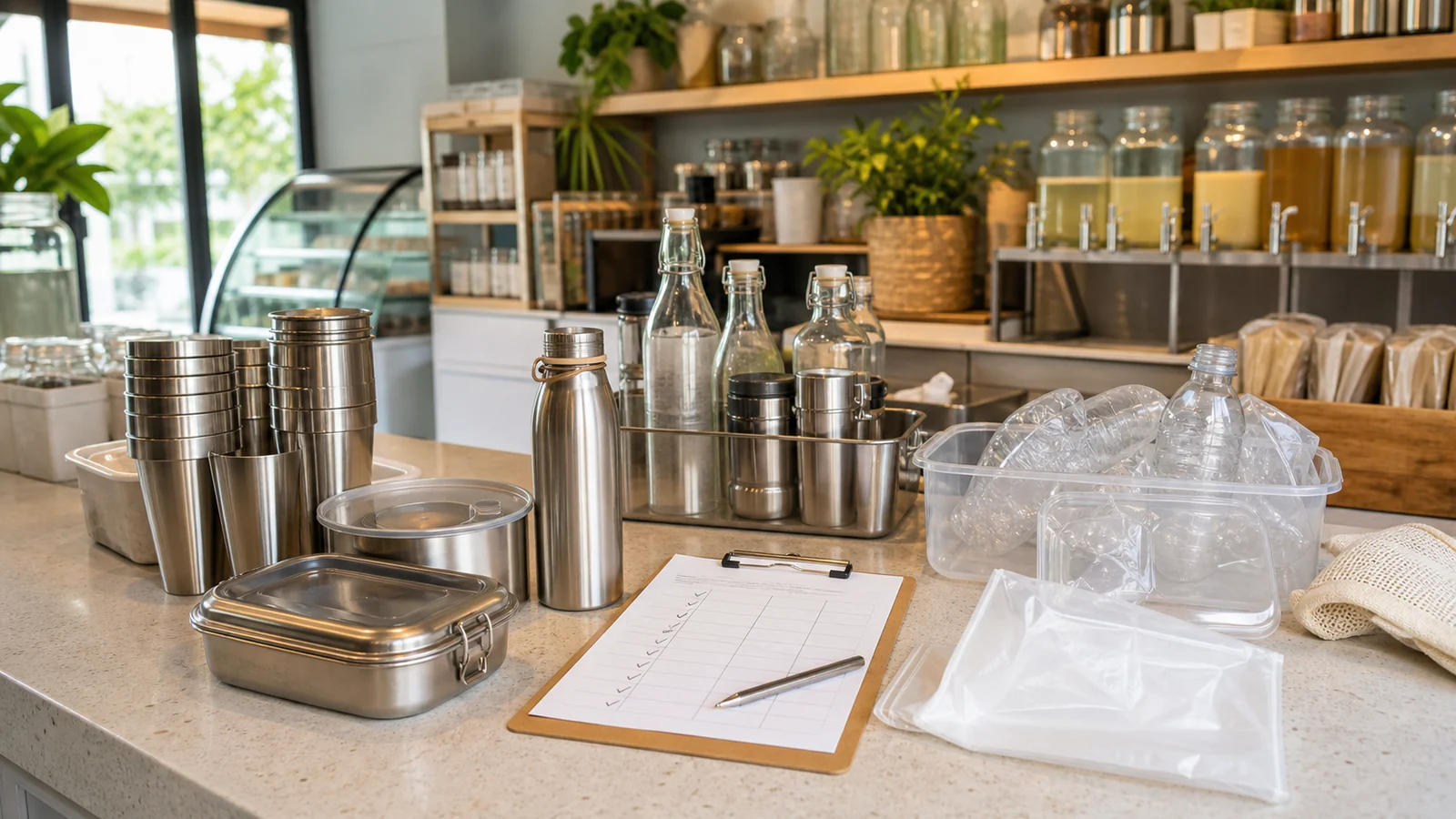
Direct answer
Reusable packaging and refill systems beat single-use plastic when the loop is real: containers are used many times, cleaned safely, returned easily, tracked honestly and designed to replace avoidable disposable packaging rather than add another layer of materials. Reuse is not automatically better because a package says refillable. It becomes better when the system has high return rates, short and efficient logistics, durable containers, clear hygiene controls, low breakage or loss, and a credible plan for end-of-life recycling or repair.
Key points
- The strongest reuse system is an operating loop, not a prettier container.
- Source reduction and reuse sit above recycling in the waste hierarchy because they prevent waste before sorting is needed.
- A refill claim needs evidence: number of expected uses, cleaning method, return route, loss rate and what happens when the container retires.
- Small businesses should test one repeated package first, then measure return rate, customer friction, cleaning time and avoided single-use units.
- Reusable packaging can reduce plastic leakage only when it replaces disposables, not when it becomes an extra premium object.
Related Plastika Problema reading
- Action checklist - useful for turning reuse ideas into practical daily habits
- How to reduce single-use plastic at home - a household starting point before choosing refill systems
- Plastic packaging greenwashing claims - background for checking whether reuse and refill claims are specific enough
- Small business plastic waste audit - a tracking method for measuring whether a refill pilot works
- Plastic types guide - context for the materials that remain after reduction and reuse choices
Why reuse is a system, not a container
Reusable packaging sounds simple: replace a disposable item with a durable one and use it again. In practice, the container is only the visible part of the system. A real reuse loop also needs collection, return, cleaning, inspection, storage, customer instructions, staff training, replacement rules and end-of-life handling. If those parts are missing, the container may only shift the burden from a single-use bin to a confusing operational problem.
This distinction matters because many environmental claims make reuse look automatic. A heavy cup, jar, bottle or tub can feel responsible on a shelf, but it must be used enough times to justify the material, transport and cleaning behind it. A lightweight disposable item is not good simply because it is light, and a reusable item is not good simply because it is durable. The better question is whether the whole loop reduces total material, litter risk and waste-management pressure in the real place where people use it.
For a public-information site about plastic pollution, reuse is important because it interrupts waste before plastic has a chance to fragment, leak into drains or enter difficult recycling streams. Recycling asks a used package to become raw material again. Reuse asks whether the package can avoid becoming waste at all. That is why source reduction and reuse deserve priority before the article discusses symbols, sorting or recycled-content claims.
When reusable packaging usually makes sense
Reusable packaging is most promising where the same product or service repeats often. Think of office lunch containers, cafe cups, hotel bathroom dispensers, cleaning-product refills, grocery dry goods, event cups, delivery crates, salon product backbars and staff pantry items. These settings have repeated demand, predictable routes and a chance to build habits. A container that circulates every day can earn back its material faster than a container that waits in a cupboard for months.
The system also needs a return or refill point that feels easier than disposal. A deposit return, membership account, visible drop box, staff-managed refill station or home refill routine can work when people understand what to do in a few seconds. If the user must read a long explanation, download a separate app, travel far out of the way or store dirty packaging for too long, the return rate will likely fall. Reuse depends on convenience as much as values.
Reusable packaging is also stronger when hygiene can be standardized. Food service, hospitality, beauty and cleaning products can all use refill or return models, but the cleaning and storage rules must be explicit. A refill station with poor labeling, open contamination risk or inconsistent staff behavior can damage trust. A reuse system succeeds when it looks calm, clean and ordinary.
When refill claims can mislead
A refill claim can be weak when the first package is heavy, the refill pouch is still single-use, the dispenser is difficult to clean, or customers rarely refill. It can also be weak when the refill system relies on small multilayer sachets that are not locally recyclable. In those cases, the brand may have replaced one visible bottle with a hidden stream of flexible plastic that is harder to recover. That is not automatically progress.
Another common problem is the premium reusable object that becomes clutter. A branded cup, box or bottle may look sustainable in a campaign photo, but if customers already own similar items or forget to bring it back, the business has created more material. The strongest reuse systems use durable containers because the operation needs them, not because a marketing team needs a symbol.
Environmental marketing guidance is relevant here. The FTC Green Guides warn against broad or unqualified environmental claims and emphasize that claims should be clear enough for consumers to understand. The same principle applies to reuse. A credible claim should say how the package is returned or refilled, how many uses it is designed for, what parts are replaceable, how cleaning is handled, and what evidence supports the impact claim. Refillable should not be treated as a magic word.
A decision test before choosing reuse
Before a household or small business chooses a reusable package, use a simple decision test. First, is the disposable item repeated often enough to matter? Second, can the package be refused or reduced instead of replaced? Third, will the reusable container be used many times by the same person or through a managed pool? Fourth, is cleaning safe and convenient? Fifth, is the return or refill route obvious? Sixth, what happens when the container breaks, stains, loses a lid or reaches the end of its useful life?
This test prevents the common mistake of treating reuse as the first answer. Sometimes the best answer is no package. Sometimes the best answer is a larger format, a concentrated product, a supplier take-back system or a simpler recyclable package accepted locally. Reuse is strongest after unnecessary packaging has already been removed. It should not become an excuse to keep every product experience wrapped, boxed and accessorized.
The test also helps compare materials without turning the reader into a life-cycle analyst. Stainless steel, glass, rigid plastic, ceramic and durable composite containers can all play a role, but the best choice depends on breakage, weight, cleaning, transport distance, product compatibility and local end-of-life routes. A glass jar can be excellent in a local refill loop and inefficient if shipped far for one use. A durable plastic crate can be practical in a closed logistics system and poor if it is frequently lost. Context decides.
Household refill habits that actually last
At home, start with the product category that repeats every week. Water, coffee, cleaning spray, laundry liquid, hand soap, shampoo, rice, nuts, pet food and lunch containers are common examples. Choose one category where a refill or reuse routine fits your actual shopping route. If the refill store is across town and you rarely go there, it may not be the best first habit. A boring routine close to your normal route will beat an impressive idea that depends on perfect planning.
Place reusable items where the disposable decision happens. Put bags by the door, bottles near keys, containers near leftovers and refill jars near the shopping list. Keep the system small enough that everyone in the home understands it. If a refill jar needs a special label, write it clearly. If a bottle needs cleaning after each use, assign the cleaning moment. The habit should not rely on memory alone.
Track the bin, not intentions. If bathroom bottles still fill the recycling or trash, try a refill format there. If snack packaging dominates, rethink lunch and shopping habits. If delivery containers are the largest stream, keep reusable pickup containers ready or reduce delivery frequency. A home reuse system becomes easier when it follows the evidence already in the waste bin.
Small-business refill pilots
A small business should not begin with a full public relaunch. Start with one repeated item and a pilot that can be measured. A cafe might test dine-in reusable cups and a discount for customers who bring clean cups. A salon might replace small product bottles with professional refill formats at the backbar. A hotel might shift from mini bottles to secure bulk dispensers. An office might replace bottled water with filtered water and washable cups. A retailer might test returnable delivery totes for local customers.
The pilot should record five numbers: single-use units avoided, return rate or refill frequency, cleaning or labor time, customer complaints or questions, and net cost. If the return rate is low, the system needs better convenience or a different container model. If cleaning time is too high, staff flow needs redesign. If customers are confused, signage or staff scripts need tightening. If costs rise without waste reduction, the pilot may need to stop or narrow.
This measurement approach is especially useful for small businesses because it turns sustainability into operations. A manager can compare invoices before and after the pilot, inspect storage space, count waste bags and ask staff where friction appears. The goal is not to win a slogan. The goal is to remove repeated disposable purchasing while keeping the service reliable.
How reuse fits official waste hierarchy thinking
The EPA waste management hierarchy places source reduction and reuse above recycling, energy recovery and disposal. That ranking is not a lifestyle preference. It reflects the practical idea that preventing waste usually avoids more problems than managing waste after it exists. A package that does not need to be produced, collected, sorted or disposed of creates fewer opportunities for leakage, contamination and confusion.
UNEP's work on turning off the tap on plastic pollution also emphasizes system change and circular-economy approaches rather than cleanup alone. The useful public lesson is that plastic pollution cannot be solved by end-of-pipe action only. Reuse and refill can be part of the answer when they reduce unnecessary production and keep materials circulating under control. They fail when they simply decorate a disposable model with greener language.
The European packaging policy direction points the same way. The European Commission describes the Packaging and Packaging Waste Regulation as covering the full life cycle of packaging, with measures on recyclability, recycled content, prevention, reuse and restrictions on some single-use formats. Readers outside Europe do not need to treat EU rules as local law unless they apply to them, but the policy direction is useful: packaging is increasingly expected to prove its route, not merely display a symbol.
Greenwashing cautions for reusable and refillable packaging
Weak reuse claims often hide the hard parts. Watch for phrases such as eco refill, zero waste, circular, reusable forever or plastic neutral without numbers or instructions. A strong claim should explain the loop. How does the user return or refill the container? How many uses are expected? Who cleans it? What prevents loss? What parts are replaced? Is the refill package recyclable or returnable? What data shows that single-use packaging was actually avoided?
Be especially careful with compostable or biodegradable refill packaging. A refill pouch can reduce rigid packaging but still be difficult to recycle or compost locally. A compostable liner may be rejected if no accepted composting route exists. A biodegradable-looking refill pack can become litter before any special breakdown conditions occur. These claims belong in the same reality check as other green packaging claims: where will the item actually go after use?
Businesses should also avoid overstating early pilots. A refill station that serves a small group of motivated customers should not be described as solving packaging waste across the whole company. A credible update says what changed, what was measured and what is still being tested. Public trust improves when claims include limits.
Checklist for a practical reuse or refill plan
Use this checklist before launching a reuse or refill system. Identify the repeated disposable package. Confirm whether the package can be removed entirely. Choose a durable container suited to the product and cleaning method. Decide whether the model is customer-owned, business-owned, deposit-based, subscription-based or staff-managed. Write the return or refill instruction in one sentence. Train staff on cleaning, inspection and exception handling. Track loss, breakage, contamination and customer friction.
Then run the system for a limited test period. Count the disposable units purchased during the test and compare them with the previous period. Count how many reusable containers were used, returned, lost, damaged or retired. Record cleaning time and storage needs. Ask staff where the system slows service. Ask customers what confused them. Do not call the pilot a success until the numbers show that it replaced disposable packaging at a meaningful rate.
Finally, plan end-of-life. A reusable container will not last forever. Lids break, seals wear, surfaces scratch and formats change. A responsible system explains whether parts can be repaired, recycled, replaced or returned to a supplier. End-of-life planning prevents a reuse program from creating a future pile of hard-to-process durable objects.
What consumers should ask brands
Consumers can ask simple questions without becoming technical experts. Is this refill available where I already shop? Does the refill package create less waste than the original package? Can I use a container I already own? Is the reusable package part of a return system or just a one-time purchase? How should I clean it? What happens if I return it damaged? Does the brand publish any numbers on avoided packaging?
If the answer is vague, choose the lower-material option that fits your local reality. Sometimes that will be a refill. Sometimes it will be a larger format. Sometimes it will be refusing an extra bag, bottle, wrap or sample. The point is not to reward every green-sounding product. The point is to reduce the flow of unnecessary plastic into daily life.
Consumers also influence businesses by asking for practical details. A polite question about refill instructions, accepted containers or packaging return can reveal whether the program is operational or only promotional. Businesses that have done the work can answer clearly. Businesses that have not may need customer pressure to make the system real.
Bottom line
Reusable packaging and refill systems can be a strong plastic-pollution strategy, but only when they are designed as loops. The container must come back, be cleaned, be used again and replace a disposable item many times. Without that loop, reuse becomes a claim attached to an object. With the loop, it becomes source reduction in action.
The best next step is specific. A household should pick one repeated package and build a refill habit around the normal shopping route. A small business should pilot one high-volume item and measure avoided units, return rates, labor and customer friction. A brand should publish clear instructions and honest limits. A policymaker should support systems that reduce packaging before waste collection is needed.
Reuse is not a perfect answer, and it is not the only answer. It works beside reduction, better design, honest labels, local recycling and stronger policy. Its value is that it asks a better first question: why should this package become waste after one short use?
Detailed infographic
Reuse and refill decision loop
A practical map for deciding whether reusable packaging will truly reduce single-use plastic or only add another material layer.
- Audit Find the repeated single-use package that appears most often.
- Remove first Ask whether the package can be avoided before replacing it.
- Design loop Choose container, return point, cleaning protocol and staff owner.
- Pilot Test one category and measure use, return, loss and service friction.
- Improve Scale only after the system actually replaces disposable packaging.
Action checklist
- Use a refill or return model only where the route is convenient.
- Write cleaning and inspection rules before launch.
- Compare purchases before and after the pilot.
- Avoid broad claims unless the impact is measured.
- Plan repair, recycling or supplier return for retired containers.
Frequently asked questions
Is reusable packaging always better than single-use plastic?
No. It is better when the container is used many times, returned or refilled conveniently, cleaned safely and actually replaces disposable packaging. A reusable item that is rarely used can add material rather than reduce it.
What is the first refill habit to try at home?
Start with a repeated product that already fits your route, such as water, coffee, cleaning spray, hand soap, laundry liquid or a dry grocery item. Convenience matters more than choosing the most dramatic swap.
How can a small business test reusable packaging?
Pilot one high-volume item, measure single-use units avoided, return rate, cleaning time, customer questions, loss and cost, then improve the workflow before scaling.
Are refill pouches always sustainable?
No. Some pouches reduce rigid packaging, but many are multilayer and hard to recycle locally. Check whether the refill package has a real end-of-life route and whether it reduces total material.
What makes a refill claim credible?
A credible claim explains the return or refill route, expected number of uses, cleaning method, container ownership, loss handling and what happens when the package reaches end of life.