Direct answer
Plastic bag bans and fees work best when they change the default shopping habit, not when they simply switch every customer from thin plastic bags to another disposable bag. Evidence reviewed by the OECD shows that taxes or mandatory charges can sharply reduce single-use bag sales when the price signal is strong enough, while bans can target high-leakage products directly. The practical answer is to carry and reuse durable bags, avoid taking paper or thicker plastic bags as automatic substitutes, and design store rules that make the reusable option easy, visible and fairly enforced.
Key points
- A bag policy should reduce the number of disposable bags used, not only change the material handed out at checkout.
- Fees work through habit and price signals; bans work by removing a high-leakage item from routine use.
- Reusable bags only help when they are used many times and kept clean enough for real shopping routines.
- Paper, compostable and thicker plastic bags can still create waste, so substitution effects must be tracked.
- Small retailers should measure bag purchases, customer exceptions and litter risk before making broad environmental claims.
Related Plastika Problema reading
- Action checklist - the core site checklist for reducing daily disposable plastic habits
- How to reduce single-use plastic at home - a household system for repeated purchases and reusable defaults
- Plastic packaging greenwashing claims - background for checking claims on compostable, recycled or eco-looking bags
- Reusable packaging and refill systems - context for when reuse beats single-use packaging
- How plastic reaches the ocean - why loose lightweight packaging becomes a stormwater and river problem
- Plastic types guide - material context for PE bags and other plastic packaging choices
Why plastic bag policy matters
Plastic carrier bags are small, cheap and familiar, which is exactly why they are important. A single bag is not the largest plastic object in a household, but the habit repeats across grocery shops, convenience stores, markets, takeaway counters and impulse purchases. Thin bags are also light enough to escape bins, blow along streets, snag on drains and fragment outdoors. The policy question is therefore not whether one bag is morally worse than every other package. The question is how to change a repeated disposable default that creates litter, collection costs and unnecessary material use.
Plastic bag bans and fees are among the most visible plastic policies because they meet people at checkout. A rule appears in the exact moment when a habit is made: accept a free bag, pay for a bag, bring a reusable bag, carry the item without a bag, or choose a different format. That direct connection can make the policy effective, but it can also make it controversial. People notice the inconvenience immediately, while the benefits are spread across waste systems, streets, drains, coastlines and procurement records.
A public-information answer should be practical. The goal is not to shame someone who forgot a bag. The goal is to explain which designs actually reduce single-use bags and which designs only move waste from one material to another. A strong policy teaches the same lesson every day: the default should be less disposable material, not a new disposable material with a greener story.
Bans, fees and charges: how they differ
A ban removes a targeted bag type from normal distribution. It may prohibit thin plastic carrier bags, require a minimum thickness for reusable bags, restrict free distribution or apply to specific retailers. A fee or charge allows a bag to remain available but makes the customer notice the choice. The customer may still buy the bag, but the free default is gone. Some systems combine both approaches, banning thin single-use plastic bags while requiring a charge for permitted alternatives.
The difference matters because the policy mechanism is different. A ban is direct and can be useful for products that frequently leak into the environment or are very difficult to manage after use. A fee is behavioral and can work well when people have easy alternatives. The OECD policy paper on preventing single-use plastic waste explains that charges and taxes have generally produced important decreases in single-use plastic bag sales where the price signal is set above what consumers are willing to ignore. The same paper notes that bans can be effective when the aim is to target specific products associated with leakage.
Neither tool is perfect by itself. A ban can create loopholes if retailers shift to thicker bags that are technically reusable but still treated as disposable. A fee can become too small to matter if shoppers absorb it as a normal cost. A policy can also fail if it does not cover enough stores, if enforcement is weak, or if alternatives create other impacts. The best design starts with the real behavior to change: fewer disposable bags leaving the checkout.
What the evidence says about behavior change
Policy evidence is strongest when it measures actual bag distribution, not only public support. The OECD paper cites examples where mandatory charges led to large reductions in single-use plastic carrier bag use, including the well-known Irish levy example. It also cautions that estimates vary across jurisdictions because methods, baselines, enforcement and consumer habits differ. That caveat is important. A number from one country should not be copied blindly into another city, but the broad lesson is clear: when a bag stops being free and automatic, many customers change behavior.
Behavior change depends on friction. If reusable bags are visible, affordable, durable and easy to carry, a fee can nudge people toward reuse. If no alternative exists, the fee may feel like punishment. If the charge is tiny, shoppers may keep buying bags. If staff silently hand out bags because checkout speed is the only priority, the policy loses force. If online ordering platforms automatically add bags, the checkout rule may not reach delivery behavior. The practical design must cover the whole shopping routine.
A good policy also tracks substitution. When thin plastic bags disappear, customers may buy more bin liners, accept more paper bags, or use thicker plastic bags only once. Some substitution is expected. The question is whether total material use, litter risk and repeated disposability decline. A store that cuts thin plastic bags by 90 percent but doubles heavy disposable bag use has not solved the problem. Measurement should follow the material, not the press release.
Why reusable bags are not automatically better
Reusable bags are a tool, not a symbol. They reduce waste when they are used enough times to replace many disposable bags. A durable bag that is forgotten at home, used once, or collected in a cupboard as a promotional item does not deliver the intended benefit. This is why plastic bag policy should focus on routines: where the bag is stored, how customers remember it, whether it is easy to wash, and whether store staff support the reusable default.
Different bag materials have different production footprints. Cotton, woven polypropylene, paper and thicker plastic all require resources. The exact comparison depends on material weight, manufacturing, transport, washing and number of uses. That complexity should not become an excuse for taking disposable bags forever. It should make the advice more precise: choose a few durable bags, use them repeatedly, keep them where shopping decisions happen, and avoid accumulating more reusable bags than you actually need.
Cleanliness also matters. Food shopping bags can carry leaks, crumbs and moisture. A reusable system works better when bags are easy to shake out, wipe or wash. Retailers can help by giving calm instructions for meat, fish, produce or bakery items where local hygiene rules require separation. A reusable bag habit should feel normal and practical, not like a fragile environmental performance.
Paper, compostable and thicker plastic substitutions
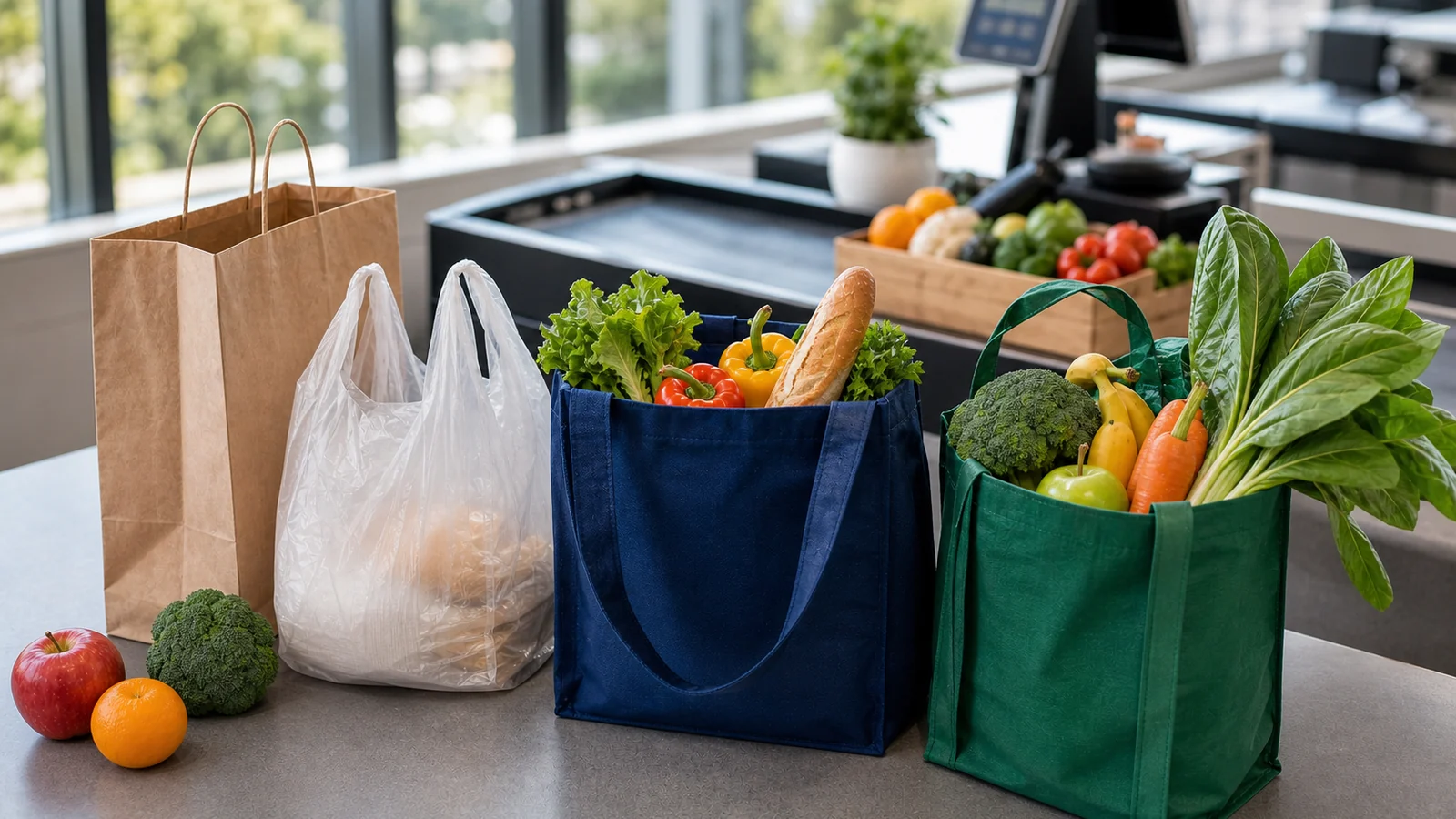
A plastic bag ban can accidentally encourage people to treat paper bags as impact-free. Paper may be easier to recycle in some local systems and may avoid some plastic-litter harms, but it is still a material with production, water, transport and disposal impacts. If every shop replaces free thin plastic with free paper, the disposable habit remains. The better question is whether the customer needed a bag at all and whether a durable bag was available.
Compostable bags create another common misunderstanding. Compostable does not mean the bag should be littered, placed in normal recycling or expected to disappear in the ocean. Compostable products need the right conditions and an accepted composting route. If a city does not accept compostable bags, or if they contaminate recycling streams, the claim can confuse customers. A compostable bag may be useful for certain organic-waste systems, but it is not a universal replacement for reducing checkout bags.
Thicker plastic bags can be sensible when they are genuinely reused many times. They become a loophole when they are handed out as disposable bags under a different legal category. This is one of the most important greenwashing cautions in bag policy. A retailer should not call a heavy plastic bag sustainable unless it has a realistic reuse pattern, clear customer instructions and measured reduction in total bag purchases. Material switching is not the same as waste prevention.
A household system that works
The simplest household system is a bag loop. Keep two or three durable bags near the place where you leave home. After unloading groceries, put the bags back by the door, in a vehicle, in a backpack or beside keys. Keep one compact bag in a daily carry item for unplanned purchases. If a bag gets dirty, clean it and return it to the loop. The habit should be boring, visible and repeated.
Then reduce bag need at the store. Loose produce does not always need a separate plastic bag. A single item may not need a carrier bag. A backpack, basket or box may work for some trips. For wet or messy items, use the right containment rather than wrapping everything by default. The goal is not to refuse every bag under every circumstance. The goal is to stop automatic bags from becoming automatic waste.
A good home rule is to count incoming bags for one month. How many plastic carrier bags, paper bags, delivery bags, produce bags and purchased bin liners entered the home? Where did they come from? Which were actually reused? This quick audit is more useful than guessing. It shows whether the problem is grocery shopping, takeaway food, convenience stores, online delivery, household trash liners or a forgotten reusable bag habit.
A retailer and small-business checklist
Small retailers should begin with purchasing records. Count how many bags were bought last month, by type and size. Estimate how many were free, how many were charged, how many were used for delivery and how many were kept for hygiene or spill protection. Then set a reduction target that is easy to verify. A simple target might be fewer total bags per transaction, fewer automatic bags for small purchases, or a switch from free default bags to customer-requested bags.
The checkout script matters. Staff need one clear phrase, such as 'Do you need a bag?' or 'Do you have your reusable bag?' The point-of-sale system should support the rule, especially for online orders. Bag fees should be visible on receipts where required. Exceptions should be defined for safety, hygiene, accessibility and spill risk so staff are not forced to improvise. A policy that is clear to workers is more likely to survive busy hours.
Stores should also avoid overstated claims. If a shop introduces a fee, say it is reducing disposable bag use and track the result. Do not claim a bag is planet-friendly simply because it is paper, compostable, recycled-content or thicker. A credible claim names the material, the intended use, the disposal route and the measured reduction. The best public message is operational: fewer disposable bags are leaving the store.
Risk and greenwashing cautions
Plastic bag policies can produce weak claims if businesses focus on appearance rather than outcomes. A green-colored bag can still be single-use. A paper bag can still be waste. A biodegradable claim can still depend on conditions that the customer will never provide. A recycled-content bag can still become litter. A reusable bag can still be disposable if customers use it only once. The public should treat broad words such as eco, earth-friendly, ocean-safe or sustainable as incomplete until the route is clear.
The strongest claim is specific and measurable. For example: 'We stopped automatic bags for purchases that can be carried by hand,' 'We charge for carrier bags and report monthly bag use,' or 'Our delivery packing script removed duplicate bags for dry items.' These statements can be checked. They also teach customers what changed. Weak claims ask the customer to trust a mood. Strong claims show a system.
Policy communication should also avoid pretending the consumer is the only actor. Retailers choose defaults, suppliers choose formats, cities set rules, waste managers accept or reject materials, and customers respond to the system in front of them. A reusable bag habit is useful, but the larger design challenge is to make less-disposable shopping the easiest normal option.
Public-information checklist for bag policies
Use this checklist before judging a plastic bag ban or fee. First, ask what item is targeted: thin plastic carrier bags, all disposable carrier bags, produce bags, delivery bags or heavy reusable-style bags. Second, ask what alternative is encouraged and whether it is actually reused. Third, check whether the rule applies across the main places people shop. Fourth, measure total bag distribution, not only thin plastic bag distribution. Fifth, watch for substitution into paper, thicker plastic or purchased liners.
For households, the checklist is shorter: carry a bag, reuse it many times, avoid taking substitute disposable bags, clean bags when needed, and audit where new bags enter the home. For retailers, the checklist adds records: monthly bag purchases, bags per transaction, fee revenue handling if relevant, staff exceptions, customer complaints, and litter or bin problems outside the store. For city teams, the checklist includes enforcement, public instructions, accessibility considerations and stormwater litter monitoring.
The best bag policy is not the one with the strongest slogan. It is the one that reduces repeated disposable material in real shopping conditions. That means the policy has to be simple enough for customers, clear enough for staff, fair enough to enforce and measured enough to improve.
Bottom line
Plastic bag bans and fees are useful because they interrupt a repeated disposable habit at the moment it happens. They are not useful when they become a material-switching exercise with no reduction in total bags. A strong policy removes free automatic bags, supports durable reuse, handles legitimate exceptions, tracks substitution and communicates honestly. A strong household habit keeps reusable bags in the shopping loop instead of treating them as occasional accessories.
The public-information posture should be steady and evidence-led. Fees can work when they are large enough to change behavior and paired with practical alternatives. Bans can work when they target high-leakage products and avoid loopholes. Reusable bags work when they are reused many times. Paper and compostable bags are not magic. Claims need routes, records and local reality.
For the next shopping trip, the best action is simple: take a bag you already own, use it again, refuse the disposable bag you do not need, and notice which purchases still create bag waste. That small routine connects directly to the larger policy goal: fewer lightweight items escaping into streets, drains, rivers and oceans, and fewer disposable materials entering the waste system in the first place.
Detailed infographic
Bag policy decision map
A practical flow for judging whether a bag ban, fee or store rule is reducing waste or only changing the disposable material.
- Target Define which bags are covered by the rule and which exceptions remain.
- Nudge Use a visible fee, request-only script or ban to interrupt the old default.
- Support Make durable reusable bags easy to carry, clean and remember.
- Measure Count total bag distribution and replacement materials each month.
- Improve Close loopholes and update customer instructions based on real behavior.
Action checklist
- Carry a durable bag and return it to the shopping loop after unloading.
- Do not treat paper or compostable bags as impact-free substitutes.
- Ask whether a bag is needed before choosing the material.
- Measure total bags, not only thin plastic bags.
- Use specific claims such as bags per transaction, not vague eco language.
Frequently asked questions
Do plastic bag bans work?
They can work when they remove high-leakage bags from routine use and avoid loopholes that shift customers to other disposable bags. Results depend on design, enforcement, alternatives and measurement.
Are bag fees better than bans?
They solve a different problem. Fees can change behavior by removing the free default, while bans directly remove a targeted item. Some effective systems combine a ban on thin bags with charges for permitted alternatives.
Are paper bags better than plastic bags?
Not automatically. Paper may have advantages in some local waste systems, but it still uses material and energy. The stronger goal is to avoid unnecessary disposable bags and reuse durable bags many times.
Are compostable bags a good replacement?
Only where the bag has a real accepted composting route and clear instructions. Compostable bags should not be littered or placed in normal recycling unless local guidance specifically accepts them.
What is the easiest habit for shoppers?
Keep one or two reusable bags where you leave home and return them there after unloading. A visible loop prevents most forgotten-bag moments.