Direct answer
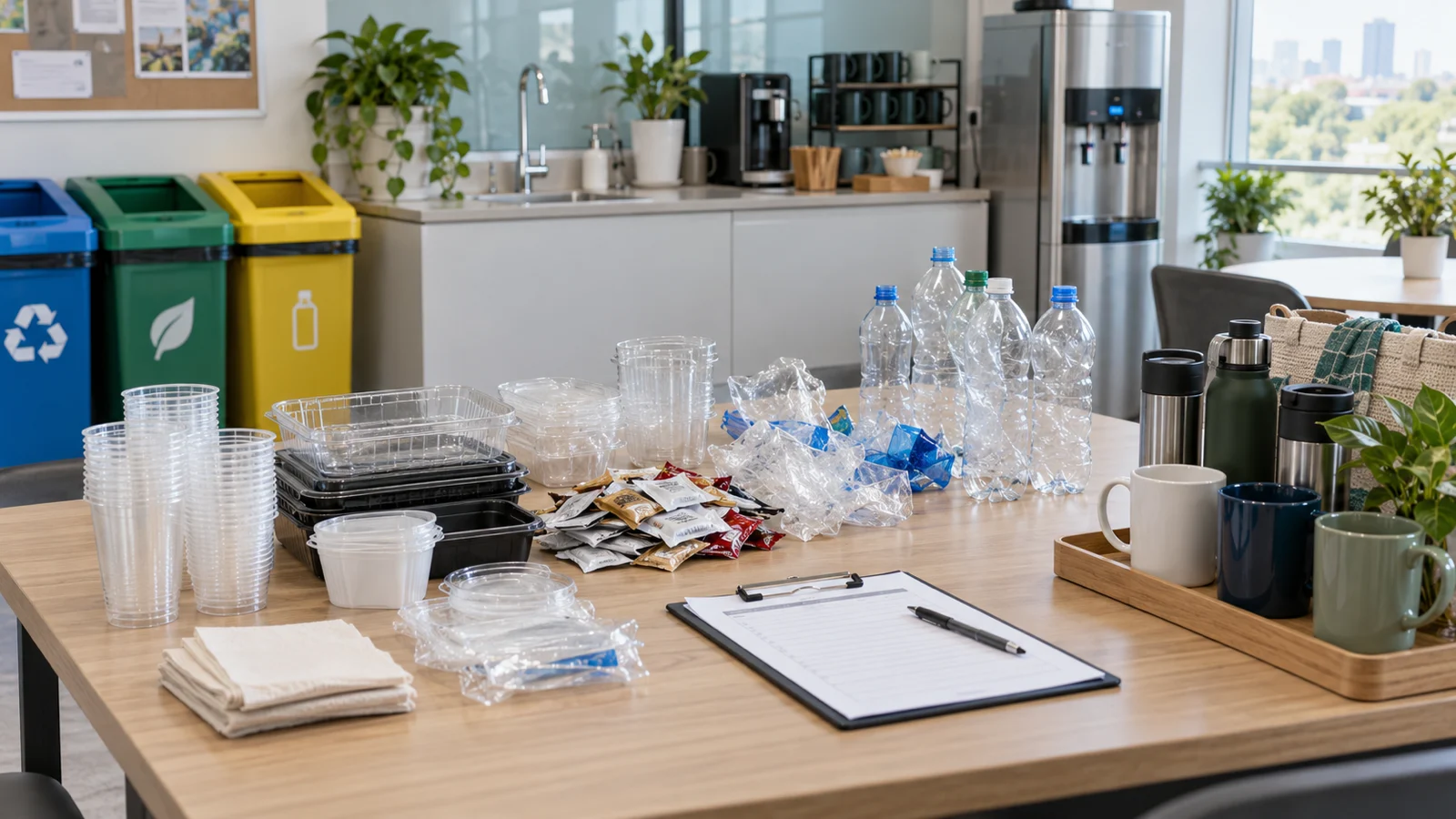
Office plastic waste reduction works best when the workplace treats the pantry, meeting room and delivery table as repeatable systems rather than as individual behavior problems. Start by counting the plastics that enter the office every week: cups, water bottles, takeaway lids, sachets, film wrap, snack packaging, cleaning containers and supplier deliveries. Then remove unnecessary items at the purchasing stage, make reusable options easier than disposable ones, keep recycling rules local and specific, and avoid broad claims such as eco-friendly or plastic neutral unless the office can show measured reductions and real end-of-life routes.
Key points
- The office pantry is a useful plastic audit point because small disposables repeat every workday.
- Source reduction should come before recycling: do not buy the disposable item if a practical reusable or refill option can replace it.
- Delivery meals, meeting catering, bottled water, snack sachets and cleaning products often create more plastic than staff notice.
- A workplace plan needs visible defaults, simple purchasing rules, clear bin signage and monthly counts, not a guilt campaign.
- Green claims from suppliers should be checked against local recovery routes and evidence, especially for compostable, biodegradable, recycled-content and plastic neutral wording.
Related Plastika Problema reading
- Small business plastic waste audit - a deeper method for counting business plastic by unit, weight, supplier and recurring use case
- Reusable packaging and refill systems - how refill loops work when they replace repeat single-use items
- Takeaway food packaging waste reduction - practical context for lunch deliveries, catering and food-service disposables
- Plastic recycling symbols explained - why resin codes are clues rather than guarantees of local recyclability
- Plastic packaging greenwashing claims - a label-checking framework for supplier and product claims
- Plastic reduction actions - site-wide public-information steps for reducing repeated plastic use
Why offices create more plastic than they think
An office can look tidy while still creating a steady stream of single-use plastic. The reason is repetition. One disposable cup is easy to ignore, but fifty cups per day across coffee, water, visitors and meetings become a purchasing habit. One snack wrapper is minor, but a pantry stocked with individual sachets creates daily packaging before anyone has made a visible mess. One delivered lunch seems convenient, but repeated containers, lids, cutlery packets, sauce cups and carrier bags quickly become an operational pattern.
That pattern is why office plastic waste reduction belongs on a public-information plastic pollution site. The office is not only a place where people work; it is a small service system with procurement, storage, staff behavior, guests, cleaners, waste haulers and local recycling rules. When the system is designed badly, staff are asked to fix waste one item at a time. When the system is designed well, fewer disposable items enter the building in the first place.
The answer-first workplace method
Start with a simple weekly count. List every plastic item that enters the workplace pantry, meeting room, reception area, print room, cleaning cupboard and delivery table. Record the supplier, format, quantity, reason for use and disposal route. Do not begin with a poster campaign. Begin with evidence. Once the repeated items are visible, rank them by frequency and avoidability. A single high-volume item that can be prevented is usually more important than a rare item that looks annoying.
The next step is to change purchasing defaults. Replace individual water bottles with safe refill access where appropriate. Replace disposable cups with clean reusable mugs or a cup-share system that actually gets washed. Ask caterers to omit cutlery and sauces unless requested. Buy pantry snacks in larger formats where hygiene and food safety allow. Consolidate cleaning products into refill or concentrate systems if staff can handle them safely. Keep recycling as a support layer, not as the main plan.
Map the office plastic hotspots
A useful audit walks the office in the order plastic moves. Start at purchasing: invoices, supplier portals, delivery notes and standing orders. Then check storage: pantry shelves, water-stock areas, reception cupboards, cleaner rooms and event supplies. Next observe use: coffee breaks, meetings, client visits, lunch deliveries, staff celebrations and late-night overtime meals. Finally check disposal: bins, recycling points, contaminated streams, waste-room bags and hauler instructions.
This walk-through prevents a common mistake: focusing only on what staff throw away at their desks. Much of the waste was already decided before staff arrived. The brand of bottled water, the caterer default, the vending-machine selection, the cleaning-product container, the procurement approval rule and the meeting-room setup all shape what becomes waste. A workplace that changes those upstream decisions reduces plastic with less friction.
Pantry items to count first
The pantry usually reveals the fastest wins because the items are frequent and visible. Count disposable hot cups, cold cups, lids, stirrers, straws, sachets, snack wrappers, single-serve condiments, water bottles, plastic-wrapped cutlery, plastic tea envelopes, yogurt cups, milk bottles, food wrap and bin liners. Record whether each item is needed for staff, guests, hygiene, convenience, procurement habit or lack of storage space.
Then ask which items can disappear without drama. If the pantry has a dishwasher or reliable washing routine, disposable cups should need a strong reason to remain. If visitors receive bottled water by default, change the default to refillable service with clean glasses. If snacks are individually wrapped because staff need portion control, test bulk containers with tongs or a smaller selection of less packaged options. If sachets exist because no one owns refilling, assign ownership rather than blaming users.
Delivery and catering rules
Office lunches and meeting catering can quietly undo pantry improvements. Delivery platforms and caterers often send default plastic cutlery, bags, cups, lids, sauce packets and protective wraps. A practical office rule is to require opt-in disposables: cutlery, straws, napkin packs and sauce cups should arrive only when requested. Meeting organizers should choose vendors that can deliver in larger shared formats, reusable trays, paper-free service plans or lower-plastic packaging where local food-safety rules allow.
The rule should be written into ordering templates because busy people follow defaults. Add fields such as no plastic cutlery, no individual sauce packets unless requested, water station instead of bottled water, reusable servingware preferred, and packaging route confirmed. A short ordering checklist can reduce more plastic than a long sustainability policy because it appears at the exact moment the waste decision is made.
Recycling symbols are not enough
Many office teams overestimate what recycling can solve. A cup with a plastic code may still be rejected locally. A black food tray may not sort well. A greasy container can contaminate the stream. A compostable cup may not belong in recycling and may not be accepted by the available composting service. A film wrapper may need a dedicated collection route. The resin code is useful information, but it is not the same as local acceptance.
This is why bin signage should name accepted office items rather than generic ideals. If the hauler accepts clean PET bottles and HDPE containers, say that. If flexible film is not accepted in the office stream, say that. If compostable serviceware goes to trash because no composting route exists, be honest and use that fact to reduce purchasing. Clear signs with photos of actual office items prevent wishcycling and keep the recycling stream cleaner.
Use EPA's hierarchy as the decision order
The waste hierarchy is helpful because it gives teams a decision order. Source reduction and reuse come before recycling and disposal. In office terms, that means preventing single-use cups before buying a better cup, setting up refill water before choosing a bottle with recycled content, and removing default cutlery before searching for compostable cutlery. Recycling matters, but it should not become permission to keep buying avoidable single-use items.
This order also keeps the plan fair. Staff should not be expected to sort a confusing stream of unnecessary items every day. Procurement should reduce the number of confusing items. Facilities should place bins where decisions happen. Managers should choose vendors that support the office rules. Staff participation is still important, but the burden is shared across the system instead of placed on the person standing at the bin.
A 30-day workplace plastic audit
Week one is measurement. Save invoices, photograph pantry shelves, count delivered disposables and record bin contents at the end of several normal days. Do not run the audit only during a special campaign week, because the goal is to see ordinary behavior. Separate recurring items from one-off exceptions. Note which department, vendor or event type creates each repeated item.
Week two is prioritization. Choose three categories: one item to eliminate, one item to replace with reuse or refill, and one item to recycle correctly. For example, eliminate default plastic cutlery, replace bottled water with a refill station and improve the PET bottle recycling point. Week three is implementation. Change the purchasing rule, update the ordering template, place the reusable alternative where people need it and give cleaners the new sorting instruction. Week four is review. Count again, ask staff where the new default failed, and adjust before expanding the plan.
Staff-friendly defaults beat guilt
A workplace plastic plan should respect attention. Staff come to work to do their jobs, not to decode a complicated sustainability puzzle at lunchtime. The better option should be obvious. Mugs should be clean and near the coffee machine. Water refill points should be easier than taking a bottle from storage. Bins should sit together, not in separate corners. Ordering instructions should be pre-filled. Meeting hosts should not need to reinvent the policy for every event.
Guilt-based campaigns often fade because they rely on constant motivation. Defaults last longer because they are built into the environment. If the office removes disposable cups from open shelves but hides the reusable mugs in a cabinet, the system will fail. If the office provides mugs, washing, storage and clear ownership, the lower-plastic choice becomes normal. Design the office like a service, not a lecture.
Greenwashing cautions for office suppliers
Office buyers should be cautious with broad supplier claims. Eco-friendly, biodegradable, compostable, recyclable, ocean-bound, plastic neutral and made from recycled plastic can all be useful or misleading depending on evidence and local route. A compostable cup without access to composting may become ordinary trash. A recyclable container that the local hauler rejects may not be recyclable in practice. A plastic neutral claim may fund a separate project without reducing the office's own plastic purchasing.
Ask suppliers for specifics. What material is the item? What percentage is recycled content, if claimed? Which local system accepts it? Does the office need a separate collection route? What certification or test standard supports compostable or biodegradable wording? What period, project and calculation support an offset or plastic neutral statement? If the supplier cannot answer, keep the public claim narrow. It is better to say the office is testing lower-plastic purchasing than to repeat a claim it cannot substantiate.
How small offices and shared workspaces can adapt the plan
A small office may not control the whole building, but it can still control purchasing defaults, pantry rules and delivery instructions. Start with what the team buys directly. Replace repeated bottled drinks, individual snack packs and default cutlery. Put a simple sign above the shared bin explaining what is accepted in the building. Ask the building manager or waste hauler for the actual recycling list rather than relying on the symbol on a package.
Shared workspaces have an extra challenge because many tenants use the same pantry. They need consistency. The operator can standardize refill water, reusable cups, clear bin stations, tenant onboarding and vendor rules for events. Tenants can support the system by ordering within the house rules and not bringing in confusing alternative packaging. The goal is not perfect tenant control; it is a shared default that reduces the most repeated items.
Metrics that are worth tracking
The simplest metric is units avoided. Count how many disposable cups, bottles, cutlery packs, bags, sachets or containers the office bought before and after the change. If weights are available, record weights too, but unit counts are often easier for staff to understand. Track spend and storage space as well. Plastic reduction sometimes saves money because the office stops buying items used for seconds.
Also track contamination and participation. If recycling bins are full of food-contaminated containers, the issue may be lunch setup, bin placement or signage. If reusable mugs disappear, the issue may be washing, ownership or convenience. Good metrics are not there to shame departments. They are there to show where the system needs a better design.
Public-information posture for workplace claims
A workplace should communicate plastic reduction as a measured operational improvement, not as a heroic identity. Strong wording is specific: this office removed default bottled water from meeting rooms, switched to refill stations, updated catering rules and reduced disposable cup purchasing by a measured amount. Weak wording is broad: this is a green office, an eco pantry or a zero-plastic workplace without evidence.
Public-information pages should also avoid pretending that offices can eliminate all plastic. Some plastics may be needed for hygiene, safety, equipment, food protection or local regulation. The practical question is whether the office can reduce unnecessary, repeated and poorly routed plastic. That honest posture builds trust because it tells readers what is known, what changed and what still needs work.
Bottom line
Office plastic waste reduction is not a personality test for staff. It is a purchasing, pantry, delivery and bin-design problem that can be measured and improved. The best first move is a one-week count of repeated items. The best second move is to change the default that creates the highest-volume avoidable waste. The best long-term habit is a monthly review that keeps procurement, facilities, cleaners and staff aligned.
The office pantry may feel small compared with ocean plastic, but it is connected to the same prevention logic used across this site. Plastic is easiest to reduce before it becomes waste, before it enters a confusing bin, before it fragments, and before a supplier claim turns uncertainty into marketing. Count the repeated items, remove what is unnecessary, make reuse easy, recycle only what the local system accepts, and describe progress with evidence.
Detailed infographic
Office plastic audit map
A practical flow from weekly office purchasing to source reduction, reuse, recycling clarity and supplier-claim checks.
- Count Record plastic entering the pantry, meeting rooms, deliveries and cleaning cupboard.
- Rank Sort items by frequency, avoidability, cost, hygiene role and local recovery route.
- Prevent Change purchasing and ordering defaults so unnecessary disposables do not arrive.
- Support Place reusable options and clear bins where the decisions actually happen.
- Verify Check supplier claims, recycling acceptance and monthly unit reductions.
Action checklist
- Count disposable cups, bottles, cutlery packs, sachets and delivery containers for one week.
- Make reusable mugs and refill water easier than single-use options.
- Require opt-in cutlery and sauce packets for office food orders.
- Use local hauler rules, not only recycling symbols, for bin signage.
- Keep supplier evidence before repeating green claims.
Frequently asked questions
What is the fastest way to reduce office plastic waste?
Start with the highest-volume repeated item that the office buys directly, such as disposable cups, bottled water or default lunch cutlery. Change the purchasing or ordering default first, then support staff with a reusable or refill option that is easy to use.
Should an office buy compostable cups?
Only if there is a real collection and composting route for that product in your location. If compostable cups are sent to trash or contaminate recycling, source reduction and reusable cups are usually more practical.
How do we get staff to participate without nagging?
Design better defaults. Put reusable mugs near the coffee machine, keep bins together with simple signs, update catering templates and make refill water convenient. Participation improves when the lower-waste action is the easiest action.
Can a small office do a plastic waste audit without weighing everything?
Yes. Unit counts are a strong start. Count cups, bottles, cutlery packs, sachets, containers and bags for a normal week, then convert to purchasing changes. Weight data can be added later if needed.
What green claims should office buyers question?
Question broad words such as eco-friendly, biodegradable, compostable, recyclable, recycled, ocean-bound and plastic neutral unless the supplier provides material details, local disposal instructions, percentages, certification or project evidence.
Sources and further reading
- EPA guide for managing and reducing wastes in commercial buildings
- EPA waste management hierarchy
- EPA food service source reduction programs
- EPA sustainable food service and food service ware guidance
- UNEP Single-use plastics: A roadmap for sustainability
- UNEP Turning off the Tap report
- FTC Green Guides