Direct answer
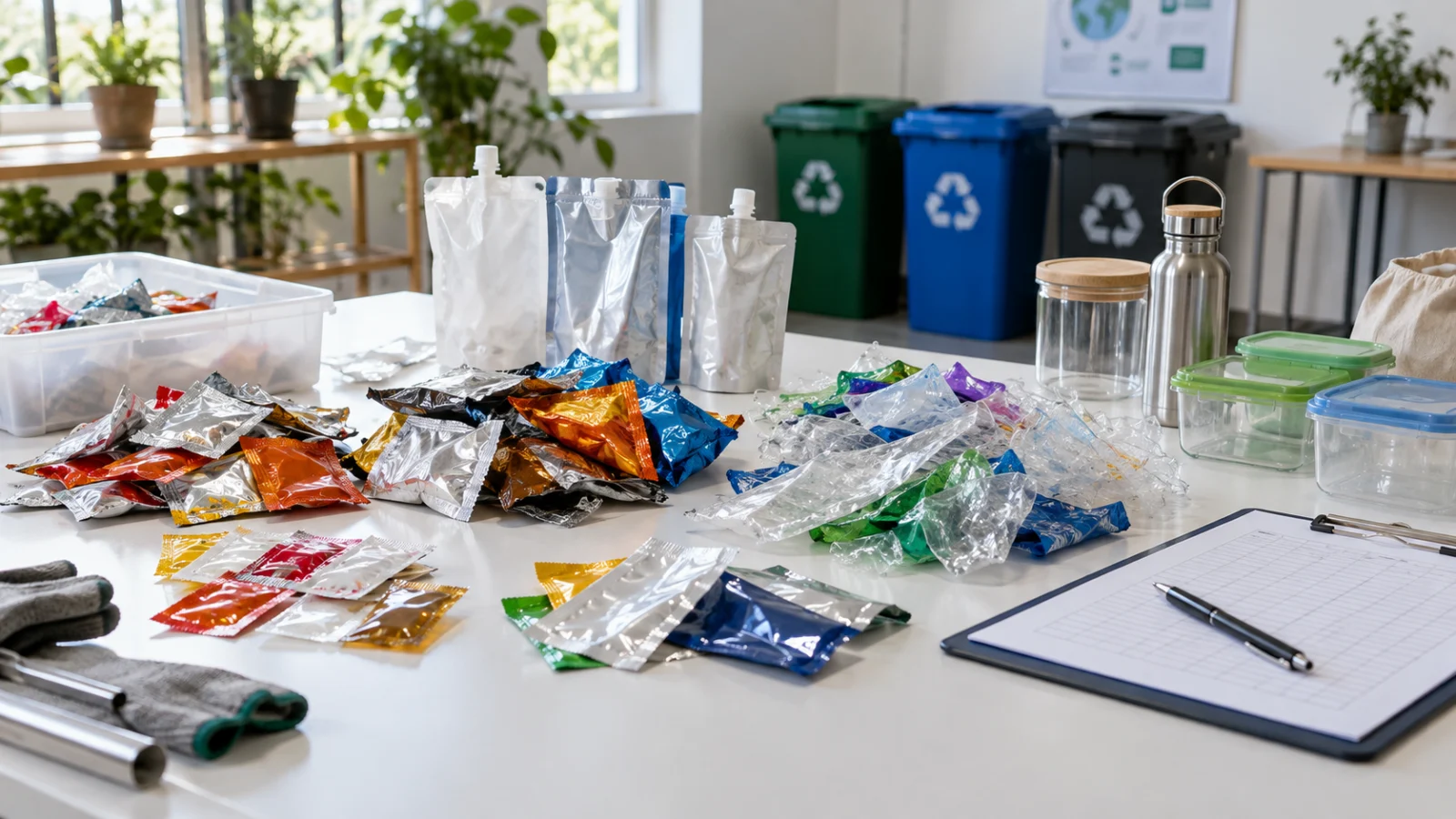
Plastic sachets and flexible packaging create a difficult waste problem because they are small, lightweight, often multilayered and frequently used for seconds. They can help with affordability, hygiene and portion control in some contexts, but many formats are hard to collect, hard to sort and hard to recycle at scale. The strongest response is to avoid unnecessary sachets first, shift repeated uses into refill or reuse systems where hygiene allows, design remaining flexible packs with simpler materials, and be cautious of vague recyclable, compostable or biodegradable claims.
Key points
- Sachets, wrappers and pouches are easy to distribute but difficult to recover after use.
- Multilayer flexible packaging can protect products well, but mixed layers often make recycling harder.
- Small format does not mean small impact when millions of units are used repeatedly.
- Source reduction, refill systems and simpler material design usually beat wishful recycling claims.
- Businesses should track sachets by unit count and purpose, not only by total waste weight.
Related Plastika Problema reading
- Plastic packaging greenwashing claims - a related checklist for checking recyclable, compostable and plastic-free wording
- Reusable packaging and refill systems - background on when refill models beat single-use packs
- Plastic recycling symbols explained - help for separating material codes from real local recyclability
- Plastic reduction actions - practical site-wide steps for reducing repeated disposable items
Why sachets feel useful and still create a problem
Plastic sachets are popular because they solve immediate business problems. They make small portions easy to sell. They protect a dose of shampoo, sauce, supplement, spice, detergent, lotion or sample from moisture and tampering. They are light to ship, convenient to hand out and cheap enough to attach to promotions. For low-income customers, a small pack can also make a product affordable for one day when a larger container is out of reach. A serious article should acknowledge those functions before criticizing the waste.
The environmental problem begins after that short useful life. A sachet may be torn open in seconds, then become a tiny flexible object that is hard to capture. It can blow out of an open bin, fall through sorting equipment, stick to food waste, enter drains, or be too contaminated to process. Even when it reaches a facility, its layered structure may combine plastic film, metalized film, adhesives, inks or coatings. The package worked as a barrier, but the same design can make end-of-life recovery difficult.
What counts as flexible packaging
Flexible packaging is a broad category. It includes sachets, condiment packets, snack wrappers, refill pouches, sample packs, stick packs, flow wraps, laminated films, mailer bags, pillow packs and plastic-lined paper structures. The shared feature is that the pack changes shape when filled or handled. It is not a rigid bottle, jar or tub. That flexibility can reduce weight and shipping emissions for some products, but it also changes how the package behaves in collection and sorting.
The phrase multilayer matters. A simple polyethylene film may be one material family. A high-performance pouch may combine several layers to block oxygen, light, grease, smell or moisture. Food, cosmetics and personal care products often need those barriers for safety, shelf life or product quality. The question is not whether every layer is pointless. The question is whether the product truly needs a disposable small multilayer pack, whether the pack can be redesigned with fewer compatible materials, and whether a realistic recovery route exists where it is sold.
Why small packs are easy to underestimate
Sachets create a measurement trap. By weight, one empty packet is tiny. By unit count, repeated sachets can dominate a waste audit. A hotel bathroom may remove mini bottles but still hand out single-use vanity kits. A restaurant may stop plastic straws but continue giving out several sauce packets with each order. A salon may use sample sachets for convenience. A household may buy single-serve snacks because they are easy to carry. Each decision looks small, but the repetition creates the waste stream.
That is why a useful waste audit counts units as well as kilograms. Flexible packaging can look insignificant in a bin because it is light, crumpled and mixed with other waste. Counting units reveals habits: how many condiment sachets per day, how many sample packs per month, how many refill pouches per product line, how many snack wrappers per staff room, how many promotional sachets given away without being requested. The prevention opportunity is often hidden in that unit count.
Recycling claims need special caution
A recycling triangle, green phrase or recyclable label should not be treated as proof that a sachet will be recycled locally. Flexible packs can be rejected because they are too small, too light, too contaminated, too mixed in material, or too hard to separate from paper and food waste. Loose film can also interfere with sorting equipment in some systems. Even when a flexible pack is technically recyclable in a specialist stream, ordinary curbside collection may not accept it.
This is where public information has to be careful. It is not enough to say that a pouch is recyclable because a laboratory or dedicated program can process the material. The disposal instruction should match the place where the item is actually used. If the item is sold in a market with no take-back route, no accepted store-drop route and no local flexible-plastic collection, a broad recyclable claim can mislead readers. The better claim is specific: accepted in which program, under which conditions, after what cleaning step, and for which component of the pack.
When refill pouches help and when they do not
Refill pouches can reduce waste when they replace many rigid bottles and when the user actually refills a durable container many times. A concentrated cleaning refill, a large-format salon product pouch feeding a dispenser, or a hotel back-of-house refill system may reduce the number of single-use units handled by customers. In those cases, the pouch is part of a source-reduction design because one flexible pack replaces many smaller packages.
But a pouch is not automatically sustainable. A single-use pouch that replaces one recyclable bottle may simply move the waste from a rigid format with a known route into a flexible format with no local route. Tiny refill sachets that are used once each can become a worse habit than a larger bottle. The honest question is not whether the object is a pouch. The question is how many units it replaces, what material it uses, how it is collected, and whether the refill behavior actually happens.
A practical sachet-reduction checklist
Start by listing every sachet, wrapper and pouch used in a normal week. Separate essential protective packaging from convenience packaging. Essential may include products that need sterile, tamper-evident or moisture-proof protection. Convenience may include default condiment packets, automatic cutlery packs, promotional samples, tiny amenity sachets and individually wrapped items used only because they are easy to distribute. The first reduction target is the convenience group.
Then apply four tests. Is the item requested by the customer or automatically given? Could a dispenser, bulk container, returnable container or staff-controlled portion replace it safely? Could the same product be sold in a larger format without increasing waste elsewhere? Does the supplier offer a simpler mono-material pack or a documented take-back route? If the answer is yes, run a small trial before making a claim. Measure waste, cost, hygiene, customer satisfaction and staff workload.
What small businesses should track
A small business does not need a perfect life-cycle assessment to improve. It needs a clear purchasing and waste record. Track unit count, supplier, product purpose, packaging format, disposal route and customer need. For example: sauce sachets used per week, sample sachets handed out per campaign, cleaning refill pouches used per month, snack wrappers in the staff area, and flexible mailers shipped per order. Record whether each item is avoidable, replaceable, refillable or still necessary.
This turns plastic reduction into an operating decision. A manager can see that automatic sachet distribution is costing money and producing waste. A buyer can ask suppliers for larger formats or compatible materials. A staff trainer can change the default from 'add three packets' to 'offer only when requested'. A public claim can then be narrow and evidence-led: fewer sachets used, refill dispensers installed, or a specific product line moved from small packs to bulk service.
Greenwashing risks with tiny packaging
Small packs attract soft environmental language because the pack itself looks too small to challenge. Brands may call a sachet eco, plant-based, plastic-free, biodegradable, recyclable, ocean-safe, compostable or circular without explaining the end-of-life route. Some words may describe a real improvement. Others may describe only a material substitution while leaving the same disposable behavior in place. The risk is that a green word hides the repeated unit problem.
The strongest communication avoids mood words and gives instructions. Say what changed, what did not change, and what the user should do next. If a flexible pack is accepted only through a take-back program, state that. If a compostable sachet needs industrial composting and is not accepted locally, do not imply it disappears harmlessly. If a refill pouch reduces plastic weight but is not recyclable, say so honestly and explain why the source-reduction benefit still matters or why another option is being tested.
Better design principles for flexible packaging
Packaging designers can reduce damage by starting with necessity. Remove unnecessary individual wrapping. Avoid tiny formats where a dispenser, larger pack or reusable container works. Use the least material that protects the product safely. Prefer material combinations that fit a known recycling or recovery route. Reduce dark colors, excessive inks, glued-on extras and mixed components that make identification harder. Make instructions visible and realistic for the place of sale.
For product teams, the design brief should include end-of-life from the beginning. What system will collect this pack? What happens if it is wet, oily or torn? Does the customer have to clean it? Does the pack need multiple materials, or is that legacy design? Could the product be concentrated so fewer packs are needed? Could a refill station serve frequent users? A beautiful sachet that nobody can recover is not finished design. It is only finished marketing.
What households can do without turning shopping into homework
Households can begin with repeated categories: snacks, condiments, bathroom samples, laundry products, travel toiletries and online delivery packaging. Choose larger formats only when the product will actually be used before expiry. Decline automatic extras. Keep a small container for sauces when ordering from places that allow it. Use refill products when the refill replaces many smaller packs and does not create a confusing disposal problem. Save local recycling guidance instead of trusting a symbol on the pack.
The goal is not to shame every small packet. Some sachets exist because people need affordability, safety or access. The practical habit is to remove the needless repeated ones first. If a packet is given out by default and often thrown away unused, it is a clear target. If a tiny pack is the only affordable option, the solution may need policy, retailer refill systems or better product access rather than blaming the shopper.
How public policy is moving
Policy attention is increasingly focused on packaging prevention, design and accountability. UNEP's single-use plastics roadmap frames the issue as a shared responsibility for governments, businesses and individuals, while UNEP's circular-economy work emphasizes turning off the tap through reduction, reuse and better systems. OECD guidance highlights upstream policies such as avoiding unnecessary plastics and designing products for reuse alongside downstream collection and recycling. These ideas all point in the same direction: collection alone cannot solve disposable packaging growth.
The European Union's Packaging and Packaging Waste Regulation is especially relevant because it addresses packaging across the life cycle and includes restrictions on certain single-use plastic packaging, including individual portions or sachets of condiments and sauces. Even outside Europe, these rules are useful signals. They show that tiny flexible packs are not just a consumer litter issue. They are part of a larger packaging design and waste-prevention question.
Bottom line
Plastic sachets and flexible packaging should be judged by function, frequency and route. If a pack protects an essential product and prevents larger waste, it may have a role. If it is handed out by habit, used for seconds and has no realistic recovery path, it is a strong source-reduction target. The most useful question is simple: does this small pack prevent more waste than it creates, and can users actually dispose of it correctly where they live?
For households, reduce repeated tiny packs first. For small businesses, count units and change defaults. For brands, simplify materials and stop making claims that depend on infrastructure customers do not have. For policymakers, prevention, reuse and producer responsibility should come before asking the public to solve a multilayer design problem at the bin.
Detailed infographic
Sachet and flexible-packaging decision map
A practical route from small-pack audit to source reduction, refill trials and honest disposal claims.
- Count Track sachets, wrappers and pouches by unit count and purpose.
- Classify Separate essential protection from convenience or default handouts.
- Reduce Remove automatic extras and promotional packs that often go unused.
- Refill Test dispensers, bulk formats or refill pouches only where behavior works.
- Claim Use narrow disposal wording tied to a real route, not vague green language.
Action checklist
- Ask whether the sachet is requested or automatic.
- Check if a dispenser or larger format can work safely.
- Confirm local acceptance before using recyclable claims.
- Measure unit reduction before making public claims.
Frequently asked questions
Are plastic sachets recyclable?
Some flexible packaging can be recyclable in specialist systems, but many sachets are not accepted in ordinary local recycling because they are small, lightweight, contaminated or multilayered. Check the exact local route before trusting a broad recyclable claim.
Are refill pouches better than bottles?
They can be better when one pouch replaces many smaller packages or repeated rigid bottles and the refill habit actually happens. They are not automatically better if they replace one accepted package with a flexible pack that has no recovery route.
What is the first sachet-reduction step for a business?
Count sachets and pouches by unit and purpose for one week. Remove automatic handouts first, then test dispensers, larger formats, staff-controlled portions or supplier alternatives where hygiene and customer experience still work.
Do biodegradable sachets solve the problem?
Not by themselves. A biodegradable or compostable claim needs the right conditions, time frame and local facility. If the item is littered, landfilled or put in the wrong bin, the claim may not deliver the environmental result shoppers expect.