Direct answer
Synthetic clothing can shed tiny plastic fibers during wearing and washing. Polyester, nylon, acrylic and similar materials are useful, but friction, heat and washing can release microfibers that enter wastewater and dust. The best practical steps are to buy fewer low-quality synthetic items, wash full loads on gentler cycles, use cold water where suitable, reduce tumble drying, keep clothes longer and consider microfiber capture tools if they fit your machine and routine.
Key points
- Microfibers are one of the everyday sources of microplastic pollution.
- Keeping clothes longer can be as important as choosing a filter.
- Gentler washing reduces friction, which can reduce shedding and wear.
- Natural fibers are not automatically impact-free, so buy less and better first.
Why clothing belongs in the plastic conversation
Plastic pollution is not only bottles and bags. Many clothes are made from synthetic polymers such as polyester, nylon and acrylic. These materials are durable, affordable and common in sportswear, fleece, uniforms and everyday fashion. They also shed small fibers during use, washing and drying. Those fibers can become part of wastewater, indoor dust and the broader microplastic conversation.
This does not mean everyone must throw away synthetic clothing. That would create more waste. The better goal is to understand shedding points, keep useful clothes in service longer, wash them more thoughtfully and buy fewer items designed for short lives.
How laundry releases fibers
Washing creates movement, friction and water flow. Older fleece, loosely constructed fabrics and low-quality garments can release more lint. Hot water, harsh cycles, small loads and heavy tumble drying can increase wear. Some fibers are captured by lint systems or wastewater treatment, while others may pass through depending on size, infrastructure and treatment technology.
The visible lint in a dryer screen is a reminder that fabric loss is real. Microfibers are the smaller part of that story. The more aggressively a garment is worn and washed, the faster it can lose material. Reducing friction is therefore both a pollution step and a clothing-care step.
Buy less, choose better, keep longer
The most overlooked microfiber strategy happens before laundry. A cheap synthetic item that pills quickly, sheds heavily and is replaced after a season creates more problems than a durable item kept for years. Buy fewer pieces when possible. Choose tighter weaves and better construction. Repair small damage. Avoid treating clothing as disposable.
Natural fibers can be useful, but they are not impact-free. Cotton, wool and viscose each have land, water, chemical or processing questions. The strongest first principle is not 'all natural always'. It is 'fewer, better, longer lasting, and washed with care'.
Wash in ways that reduce wear
A microfiber-conscious laundry routine is simple. Wash full loads so clothes do not slam around in an underfilled drum. Use cold or lower-temperature water when suitable for hygiene and fabric care. Choose gentler cycles for lightly soiled clothes. Avoid unnecessary pre-washing. Turn delicate synthetic items inside out. Clean filters and lint traps. Air dry when practical because tumble drying adds abrasion.
These habits are not only environmental. They can keep clothes looking better, reduce pilling and save energy. As with other plastic reduction habits, the sustainable option is the one that fits real life. A household that changes three routine settings every week may do more than a household that buys one gadget and forgets to use it.
What about microfiber filters and bags?
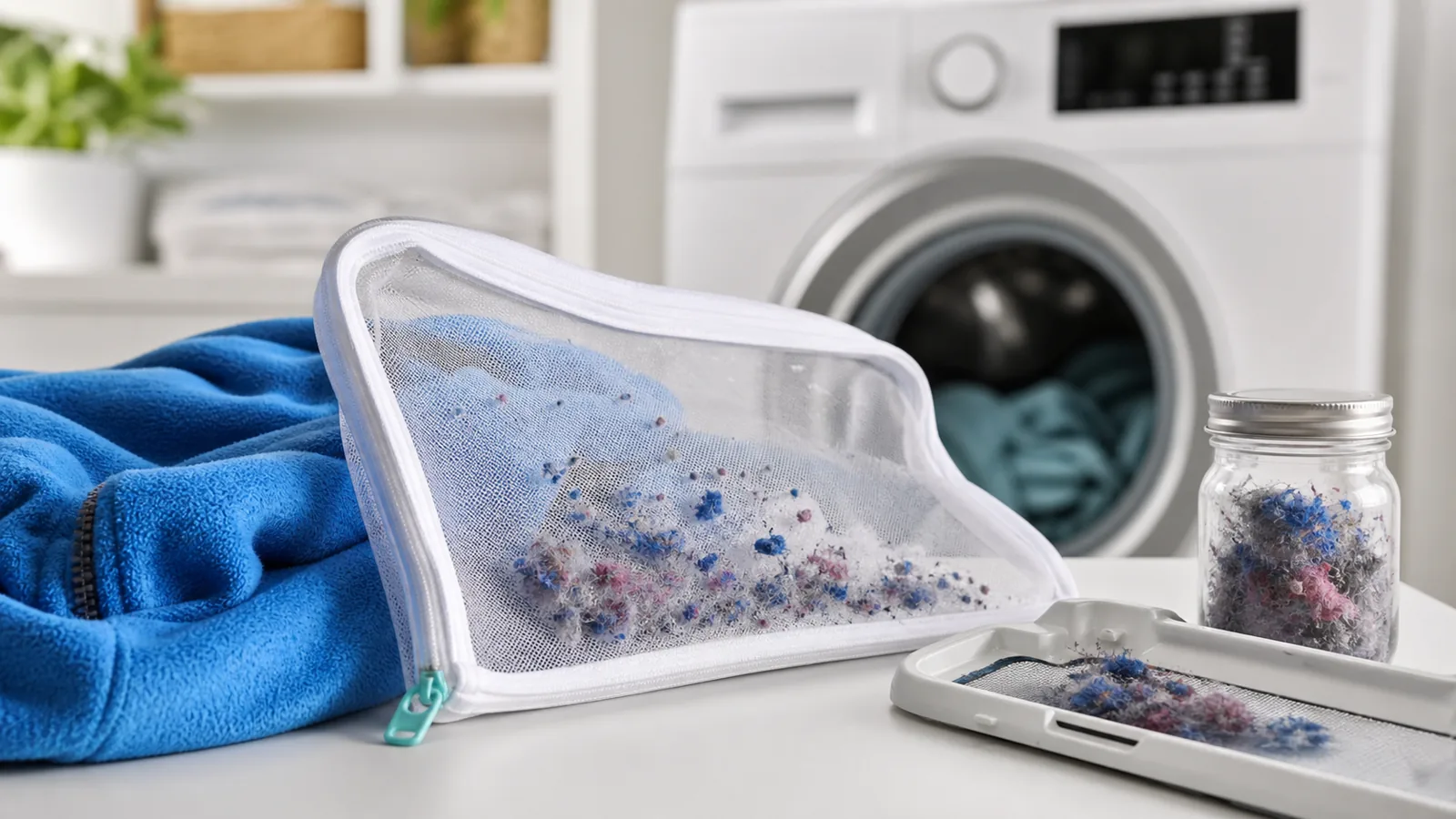
Microfiber capture tools can help in some situations. External filters, in-drum bags or balls are designed to catch fibers before they leave the laundry system. Their effectiveness depends on design, correct use, cleaning and disposal of captured fibers. A filter that is never cleaned or a bag that damages clothing is not a complete answer.
If you use a capture tool, treat the collected lint as waste, not compost. The tool should supplement better purchasing and washing habits, not replace them. The hierarchy is still useful: buy less, keep longer, wash gently, capture what you can, and support better textile design.
Why brands and policy matter
Consumers did not design the global textile system. Brands choose fiber blends, fabric construction, finishing treatments and quality standards. Policymakers influence labeling, wastewater requirements and product responsibility. Better textiles should shed less, last longer and be easier to repair or recycle. Clearer labels could help people understand material choices and care.
Microfiber pollution is a systems issue that appears in the laundry room. That makes it a good place to act, but not the only place. The long-term answer is better clothing design, slower consumption, capture technology and wastewater improvements working together.
Common mistakes in microfiber advice
One mistake is telling people to throw away all synthetic clothing. That creates waste and ignores the usefulness of durable garments. Another mistake is pretending one laundry accessory solves the whole issue. Filters and bags can help, but fabric quality, washing behavior, clothing lifespan and wastewater systems all influence the result.
A third mistake is assuming natural fibers are always simple. Natural materials can involve land, water, dyes, processing and transport. The strongest textile advice is not a single fiber rule. It is to buy fewer pieces, choose better construction, care for garments properly and keep them longer.
A microfiber-aware laundry routine
Start by separating heavily shedding items such as fleece from delicate pieces when practical. Wash full loads, but do not overpack the drum. Use gentler cycles for lightly soiled clothes. Choose cooler water when it is suitable for hygiene and care. Reduce tumble drying, because heat and abrasion can increase fabric wear. Clean lint traps and filters so captured fibers do not return to the environment.
If you use a microfiber bag or external filter, make it part of the routine rather than an occasional experiment. Empty captured fibers into the trash. Track whether the tool is easy enough to keep using. A simple habit repeated weekly is more valuable than an impressive device that becomes inconvenient.
What better textile systems would change
Brands can reduce shedding through yarn choice, fabric construction, finishing and durability standards. They can design clothing that resists pilling, survives repair and stays useful longer. Retailers can provide clearer care guidance. Policymakers can support testing methods, washing-machine filter standards and wastewater upgrades where evidence supports them.
Consumers should not carry the full burden of a textile system built for fast replacement. Still, laundry is a visible place to act. Better washing protects clothes, saves energy and reduces fibers. Better buying reduces the number of garments that need washing in the first place.
How this topic should answer reader questions
People searching synthetic clothing microfibers usually want to know whether laundry is a real source and what they can do. A strong answer should say yes, synthetic textiles can shed fibers, but do not throw away useful clothes. Keep garments longer, wash gently, reduce unnecessary washing and consider capture tools where they fit.
Short public summaries should also avoid a single-product solution. A filter can be useful, but it is not the whole answer. Fiber shedding depends on garment quality, fabric construction, washing behavior, drying, wastewater infrastructure and how often clothing is replaced. The best response combines care, consumption and capture.
How to build a low-shed wardrobe over time
Start by keeping what works. Repair zippers, remove pills carefully and follow care labels. When buying, choose garments that feel well constructed, with tighter fabrics and a real role in your wardrobe. Avoid impulse synthetic fleece or novelty fast-fashion items that will be washed often and discarded quickly.
Over time, the wardrobe becomes smaller, more useful and less wasteful. That reduces microfibers indirectly because fewer low-quality garments are made, washed and thrown away. Laundry habits matter every week, but buying habits decide what enters the laundry system in the first place.
Bottom line
Synthetic clothing is not automatically bad, and natural clothing is not automatically perfect. The better textile question is how long a garment lasts, how often it is washed, how much it sheds and whether it replaces constant buying. A low-shed routine keeps useful clothes in service, washes them gently, captures fibers where practical and avoids low-quality items designed for short lives.
The laundry room is a practical place to start because the habits are repeated weekly. The wardrobe is the deeper place to change because every future wash begins with what you choose to buy and keep.
For households, the best next step is simple: identify the synthetic items washed most often and adjust the routine around them. For brands, the better next step is design: fabrics that shed less, last longer and come with care instructions that make lower-impact washing normal.
Detailed infographic
Microfiber reduction loop
A practical laundry and buying flow for reducing synthetic fiber shedding.
- Choose Buy fewer, better constructed items.
- Care Repair, air out and avoid unnecessary washing.
- Wash Use full loads, gentler cycles and cooler water when suitable.
- Capture Use filters or bags if they fit your routine.
- Dispose Put captured lint in waste, not compost or drains.
Action checklist
- Wash full loads on gentler settings.
- Avoid tumble drying when practical.
- Keep fleece and synthetics longer.
- Consider a microfiber capture tool for frequent synthetic laundry.
Frequently asked questions
Are synthetic clothes a source of microplastics?
Yes. Synthetic textiles can shed tiny plastic fibers during wearing, washing and drying.
Should I replace all polyester clothing?
No. Throwing away useful clothing creates waste. Keep items longer, wash them carefully and buy fewer low-quality synthetics in the future.
Do microfiber laundry bags work?
They can reduce some fiber release when used correctly, but results depend on the product and routine. They work best alongside gentler washing and better clothing choices.